Published on 19 September 2026 1,667 views
Beyond Ritual: 5 Surprising Ways the GUDCON Precepts Redefine Modern Living
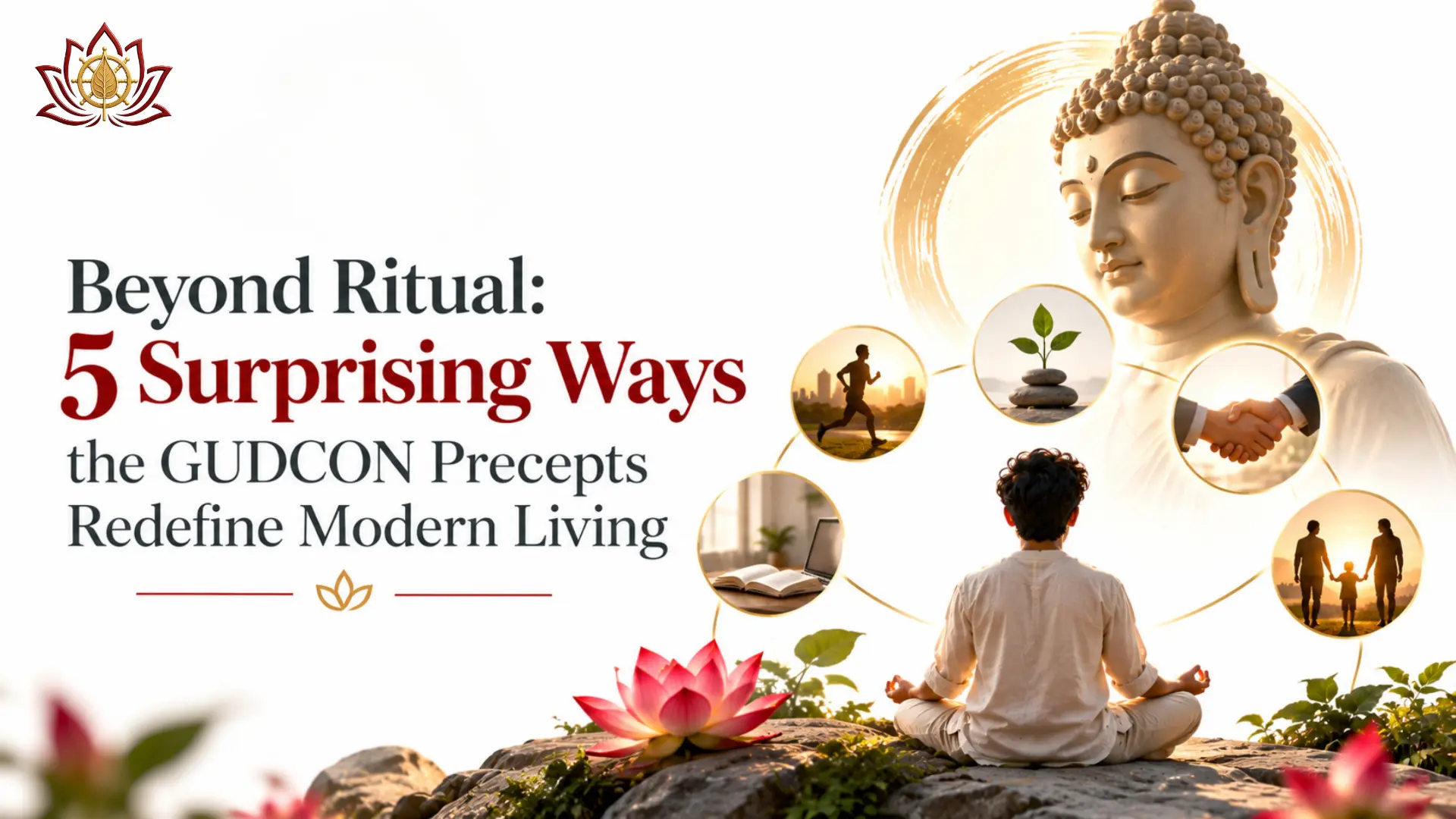
We are the most informed generation in history, yet we have never been more lost in our own skins. The Five Precepts are not rules — they are a redesign of daily life.
1. Introduction: The Restlessness of the Modern Mind
We are the most "informed" generation in history, yet we have never been more lost in our own skins. In our contemporary era, we face a peculiar paradox: our collective knowledge grows exponentially while our self-awareness fades into the background noise of notifications and deadlines. We have accumulated every conceivable comfort, but peace remains a ghost.
The Global Union of Dhamma Contemplation (GUDCON) emerges not as a new religion or a collection of superstitions, but as a modern awareness movement. It is a dedicated effort to bring the Buddha’s 2,500-year-old wisdom back into the light of the present day. At its core are the Five Precepts (Panchsheel). These are not restrictive "thou shalt nots"; they are an ethical foundation built on Tapa (discipline), Yoga (practice), Daya (compassion), and Satya (truth) designed to spark a total inner transformation.
2. Ahimsa (Non-violence): Stop the War Within
Traditional views of non-violence focus on external actions, but the GUDCON perspective teaches that real defeat happens within long before it manifests outside. To practice Ahimsa is to stop being an enemy to yourself. We often reserve our harshest judgments for our own hearts, creating a state of internal violence that the world eventually mirrors back to us.
The highest form of non-violence is self-trust. When you doubt your own voice and suppress your internal truth to satisfy the crowd, you are committing a silent act of aggression against your soul. As the source material reminds us: "
I am broken but not wrong; I am fallen but not finished." True non-violence begins with the radical acceptance of your own existence.
"
When there is war within, there is conflict outside. When there is trust within, there is cooperation outside."
3. Asteya (Non-stealing): Returning What You Stole from Your Future Self
In a modern context, Asteya moves beyond the physical act of theft and into the realm of potential. The most common form of "stealing" today is the theft of one's own future caused by the anxiety of comparison. When you look into "others' mirrors"—judging your worth by society’s standards or another person's highlight reel—you steal your unique identity and your peace of mind.
Growth is rarely a visible, linear ascent. Consider the Bamboo Tree: for four long years, it shows absolutely no movement above the soil. To an observer, the effort seems wasted. However, in the fifth year, it suddenly soars eighty feet in mere weeks. Those "missing" years were not stagnant; the tree was busy driving its roots deep into the earth to support its future height. When you stop looking into others' mirrors and focus on your "underground" growth, you stop stealing from your future self and begin building a foundation that can withstand the storms.
4. Brahmacharya (Moral Conduct): The Art of Focused Energy
In the GUDCON philosophy, Brahmacharya is redefined as Awakened Action (जागरूक कर्म). It is far from a life of mere restriction; it is the art of "
Focusing Your Energy" (ऊर्जा को केंद्रित करना). When the mind is scattered among a thousand competing desires, its power is diluted. Moral conduct acts as a lens, moving you from scattered thinking toward sharp awareness.
By aligning your actions with ethical principles, you stop leaking energy into guilt and confusion. This focus leads to a profound shift in quality of life:
- Decision Clarity: When the mind is calm and energy is focused, decisions become clear and intuitive rather than forced.
- Meaningful Living: When decisions are made with clarity, every action contributes to a life of purpose.
5. Satya (Truthfulness): The Courage to Listen to Your Own Voice
Satya is more than just "not lying"; it is the "
Sacred Mantra" of being true to your own experience (Anubhav). It is the courage to honor your own perspective even when the world demands you conform to its dictionary of success.
The Distinction Between Ego and Trust There is a vital difference in how we hold our truth. Ego shouts for attention, demanding external validation and seeking to be "better" than others. Trust/Truth, however, deepens in silence. It has nothing to prove because it is rooted in reality.
Truth is the "key" (Kunjī) to the soul. When you live in truth, mistakes are no longer "identities" that label you a failure. Instead, you accept mistakes as "teachers." This perspective allows you to learn and grow without the paralyzing weight of self-judgment.
6. Aparigraha (Non-Clinging): Lightening the Mental Load
GUDCON links the precept of "
No Intoxicants" with the deeper philosophical concept of Aparigraha (non-clinging). The greatest intoxicant we face is not a substance, but the mind’s addiction to clinging—to thoughts, results, and possessions.
The "hero" insight of GUDCON is this: Dhamma does not tell us to leave things; it tells us to stop clinging to them. You can enjoy the world’s comforts, but suffering only takes root when the mind "grabs" and refuses to let go.
"
When the mind stops clinging, it becomes light. And in a light mind, peace is born."
By practicing non-clinging, you lighten your mental load, allowing you to navigate the complexities of modern life with a sense of buoyant freedom.
7. Conclusion: The Mirror of the Universe
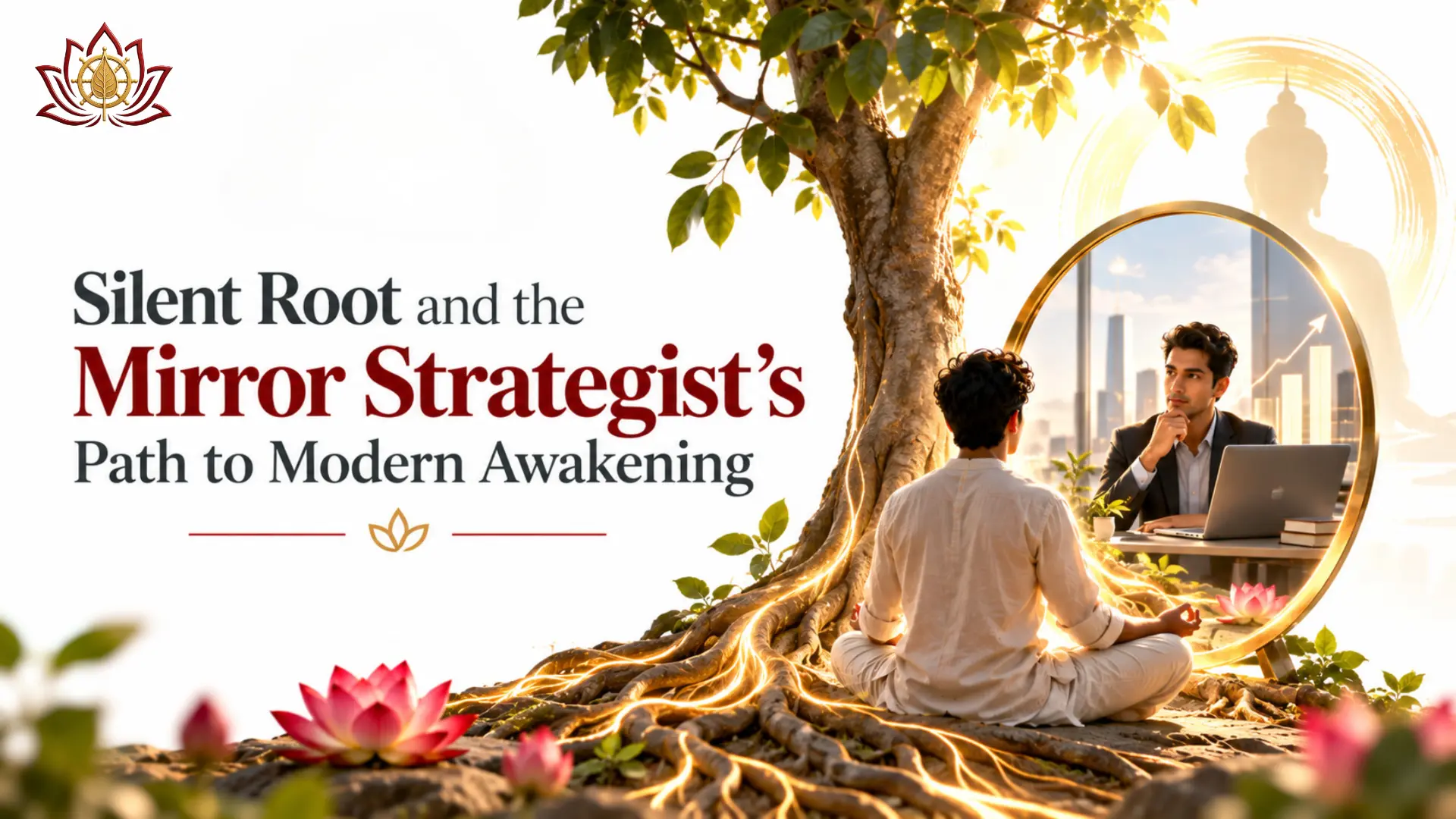
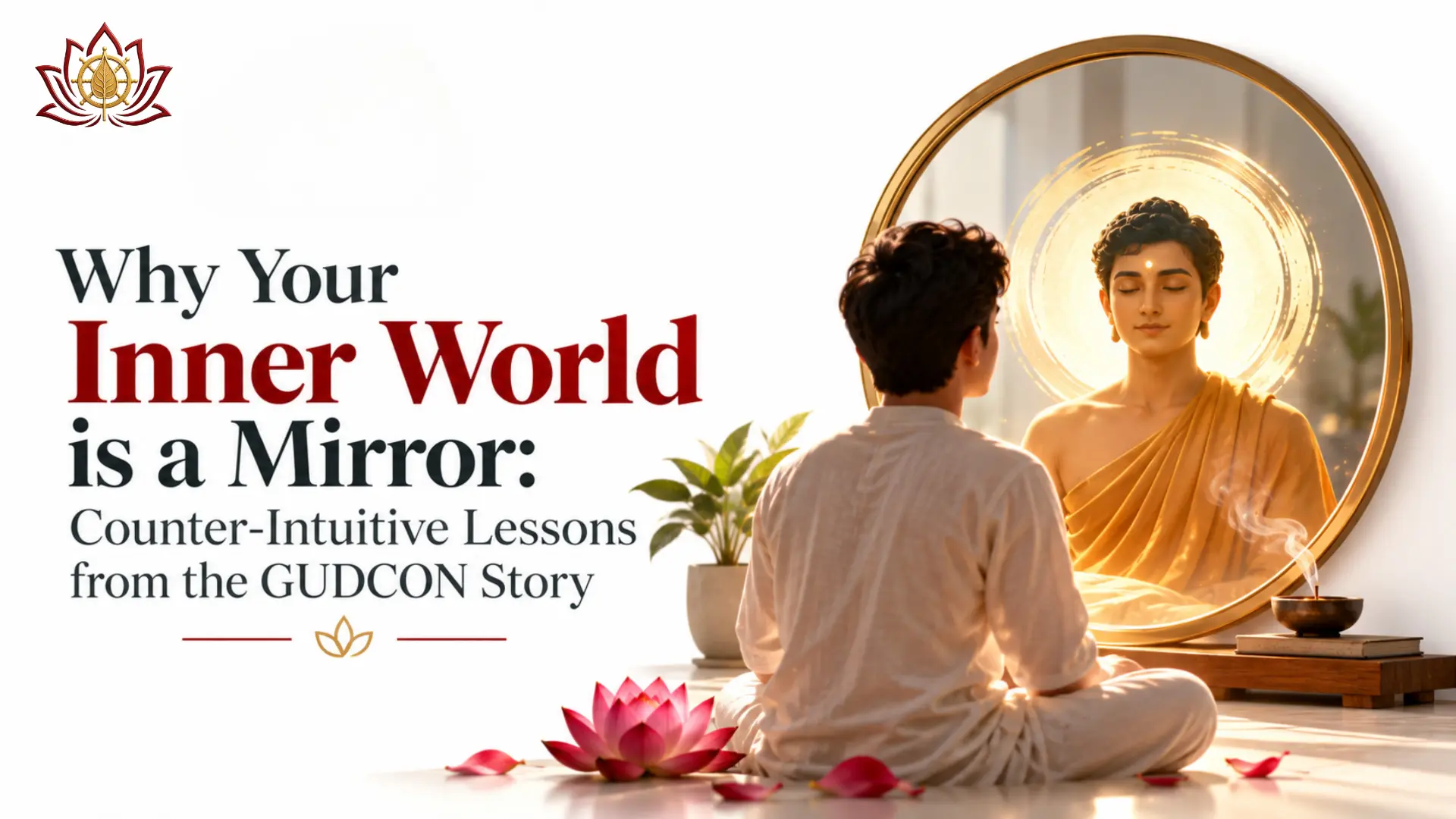
The fundamental takeaway of the GUDCON path is that the universe is a mirror, not a judge. It does not understand the definitions in your dictionary, the eloquence of your prayers, or the petitions of your speeches. It only feels and reflects your inner state—your vibration.
If there is war within, the mirror shows you struggle. If there is trust within, the mirror reflects cooperation. The universe shows you "what you are," not "what you want to show."
As you step back into the rush of the world, carry the "
Sacred Mantra" of awareness with you. Ask yourself: “If the universe reflects only your inner state today, what world are you creating for yourself tomorrow?”
Namo Buddhay — Peace in practice, Dhamma in life.
“When there is war within, there is conflict outside. When there is trust within, there is cooperation outside.”
Published on 19 September 2026 · GUDCON