Published on 12 September 2026 907 views
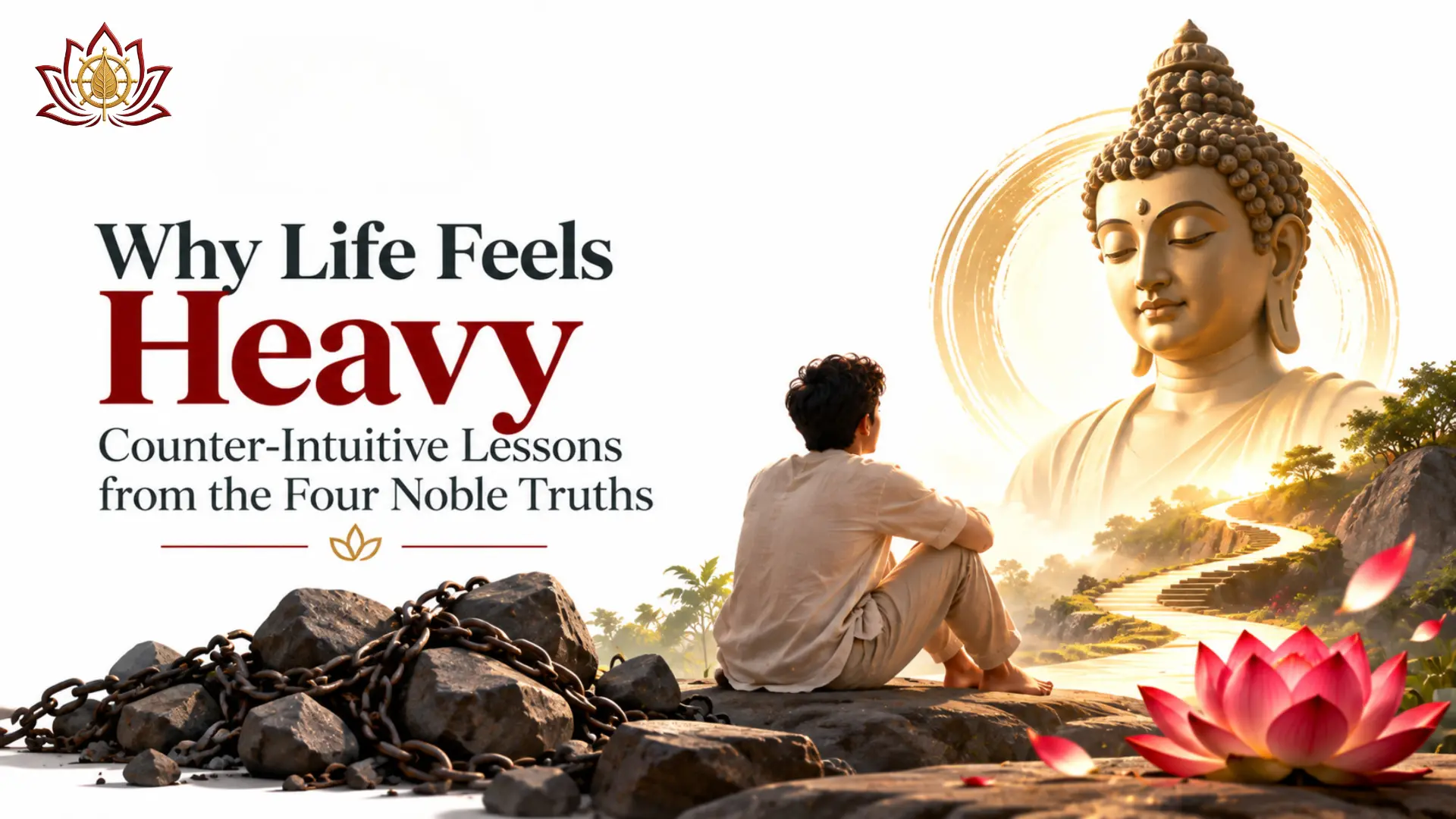
Why Life Feels Heavy: Counter-Intuitive Lessons from the Four Noble Truths
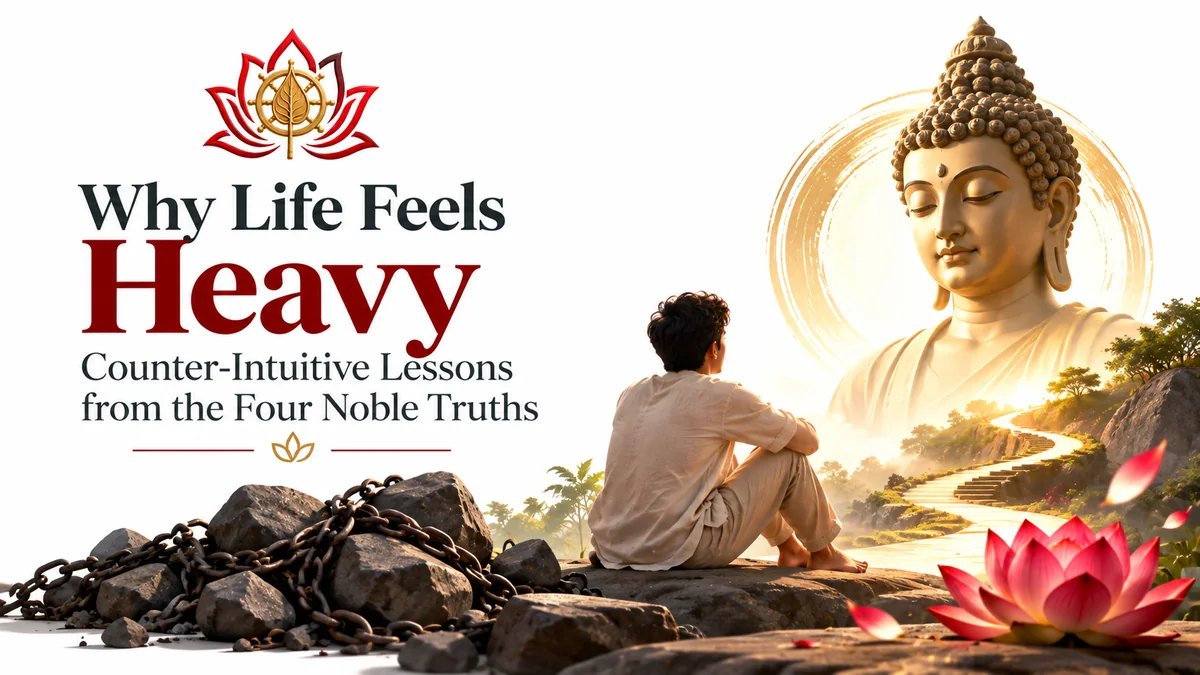
When life feels heavy, it isn't because the world has become more difficult — it is because we are navigating an internal terrain without a map.
We carry the weight of doubt like a physical burden, moving through our days in a haze of mental confusion and restlessness. Most of us look for an exit sign in the external world—a new career, a different city, a better relationship—not realizing that the door to the cage is already open. When life feels heavy, it isn’t because the world has become more difficult; it is because we are navigating an internal terrain without a map.
The GUDCON philosophy (Global Union of Dhamma Contemplation) offers a radical departure from traditional religiosity. It is a movement of Pakhanda Mukti—freedom from the weight of superstition—shifting the seeker toward Buddha Chintan (conscious contemplation). The Four Noble Truths (Arya Satya) are not ancient relics; they are technical specifications for the modern mind to transition from "heaviness" to "lightness."
Takeaway 1: Suffering is an "Inside Job" (The Truth of Dukkha and Samudaya)
The fundamental insight of Dhamma is that suffering is a product of your mental grip, not your circumstances. We are conditioned to believe that pain is a delivery from the outside world—a financial setback or a personal betrayal. However, the friction we feel is actually the mind’s refusal to flow with the river of reality.
A "heavy mind" is a mind that has turned into a clenched fist, trying to hold onto the past or dictate the future. A "light mind" is born the moment that grip relaxes. As the GUDCON teachings remind us:
"
Suffering doesn't come from outside. It arises when the mind clings to something."
This is the counter-intuitive shift: Peace is not something you "get" or "acquire" after solving your problems. Peace is the baseline state that remains when you stop clinging to the friction. Like a river meeting the ocean, the heaviness dissolves not because the water changed, but because the resistance did.
Takeaway 2: The Universe is Your Mirror (The Power of Internal State)
The universe is a feedback loop; it echoes the frequency of your trust, not the volume of your requests. GUDCON teaches that "the universe doesn't hear prayers; it feels your inner state." If you project a state of "
I am not enough," your life will continue to reflect experiences that justify that lack. But the moment you move into the frequency of "
I am enough," the external paths begin to clear.
This growth is often invisible, a process the source compares to the Bamboo Tree Mentality:
- Patience in the Dark: A bamboo seed remains underground for four years. To the world, it looks like a failure—nothing is happening.
- Deep Rooting: During those four years, the tree is working invisibly to build a massive, complex root system. It is strengthening its foundation.
- Eventual Heights: In the fifth year, once the internal state is ready, the bamboo shoots up many feet in just a few months.
Real change is underground work. If you are struggling today, consider that you are simply in your "fourth year"—growing the roots that will eventually support your highest reach.
Takeaway 3: Dhamma is About "
Clinging Less," Not "
Having Less"
There is a persistent myth that spirituality requires you to abandon the world. GUDCON clarifies that Dhamma is not a mandate to leave your life, but an invitation to stop clinging to it. This is the path of Awakened Action—doing the work, owning the possessions, and enjoying the relationships without letting them define your soul’s weight.
To support this weightless life, the Five Precepts (Panchsheel) serve as the modern seeker’s ethical foundation:
1. Ahimsa (Non-violence): Operating from a place of peace.
2. Asteya (Non-stealing): Integrity in all dealings.
3. Brahmacharya (Moral conduct): Disciplined living.
4. Satya (Truthfulness): Alignment between word and deed.
5. Aparigraha (No intoxicants): Living with a clear, unclouded mind.
By following these, we move from blind faith to conscious living, ensuring our actions don't create more "clinging" and subsequent heaviness.
4. The Eightfold Path is a Practical Roadmap, Not a Ritual
The Ashtangik Marg is often mistaken for a religious ceremony, but GUDCON frames it as a technical transition from "
Right Vision" to "
Right Samadhi." This is the cessation of suffering (Nirodha) through practice, not prayer. The "
Namo Buddhay" movement is building a Living Sangha—a community where the Dhamma is visible in actions and thoughts rather than just books.
This practical roadmap is built on three technical pillars:
- Sahi Soch (Correct Thinking): Deep contemplation on reality to eliminate superstition.
- Sahi Karm (Correct Action): Living the Precepts through service (Seva).
- Sahi Dhyan (Correct Meditation): Developing a focused mind that resides in the present moment.
To ensure this isn't just theory, GUDCON utilizes a specific 90-day path of growth: transitioning from a single seeker to a network of 5, then 10, 25, 50, and eventually 100 active practitioners. It is a structured journey toward a collective "light mind."
Conclusion: The Courage to Move with Fear
The ultimate key to a light life is the mantra "
Sab Thik Hoga" (Everything will be okay). This is not a hollow positive affirmation; it is a profound state of trust. Trust is not the absence of fear; it is the courage to walk alongside it.
When you stop waiting for the external world to give you permission to be happy, and instead stand on the side of your own internal truth, the entire existence stands with you. The universe doesn't support your dreams; it supports your trust.
What would change in your life today if you stopped waiting for the fear to vanish and decided that "being yourself" was already enough?
“Suffering doesn't come from outside. It arises when the mind clings to something.”
Published on 12 September 2026 · GUDCON