Published on 12 August 2026 649 views
5 Ways GUDCON is Quietly Revolutionizing Modern Mindfulness
We have mastered the external world, yet our internal landscapes remain fraught with anxiety and a persistent sense of not-enoughness. Something quieter is working.
In our hyper-connected era of unprecedented material abundance, we are grappling with a strange, existential vertigo. We have mastered the external world, yet our internal landscapes remain fraught with anxiety, comparison, and a persistent sense of "not-enoughness." We treat meditation as a high-performance hack or a weekend escape, yet the peace we find is often fragilea temporary bandage on a deep-seated spiritual fatigue. This restless mind persists because we have mistaken information for transformation and ritual for realization.
Enter GUDCON (Global Union of Dhamma Contemplation). GUDCON is not another addition to the cluttered marketplace of "self-help" or a new religion seeking converts. Instead, it offers a radical Punparibhashaa redefinitionof 2,500-year-old wisdom. It acts as an architectural re-striping of the spiritual landscape, stripping away the debris of blind faith to reveal a "conscious spirituality" rooted in the Buddha’s original Dhamma. By shifting from a culture of performance to a pedagogy of presence, GUDCON provides a practical, psychological framework for the modern seeker to build a peace that is both durable and self-sustained.
1. Dhamma is a Verb, Not a Ritual
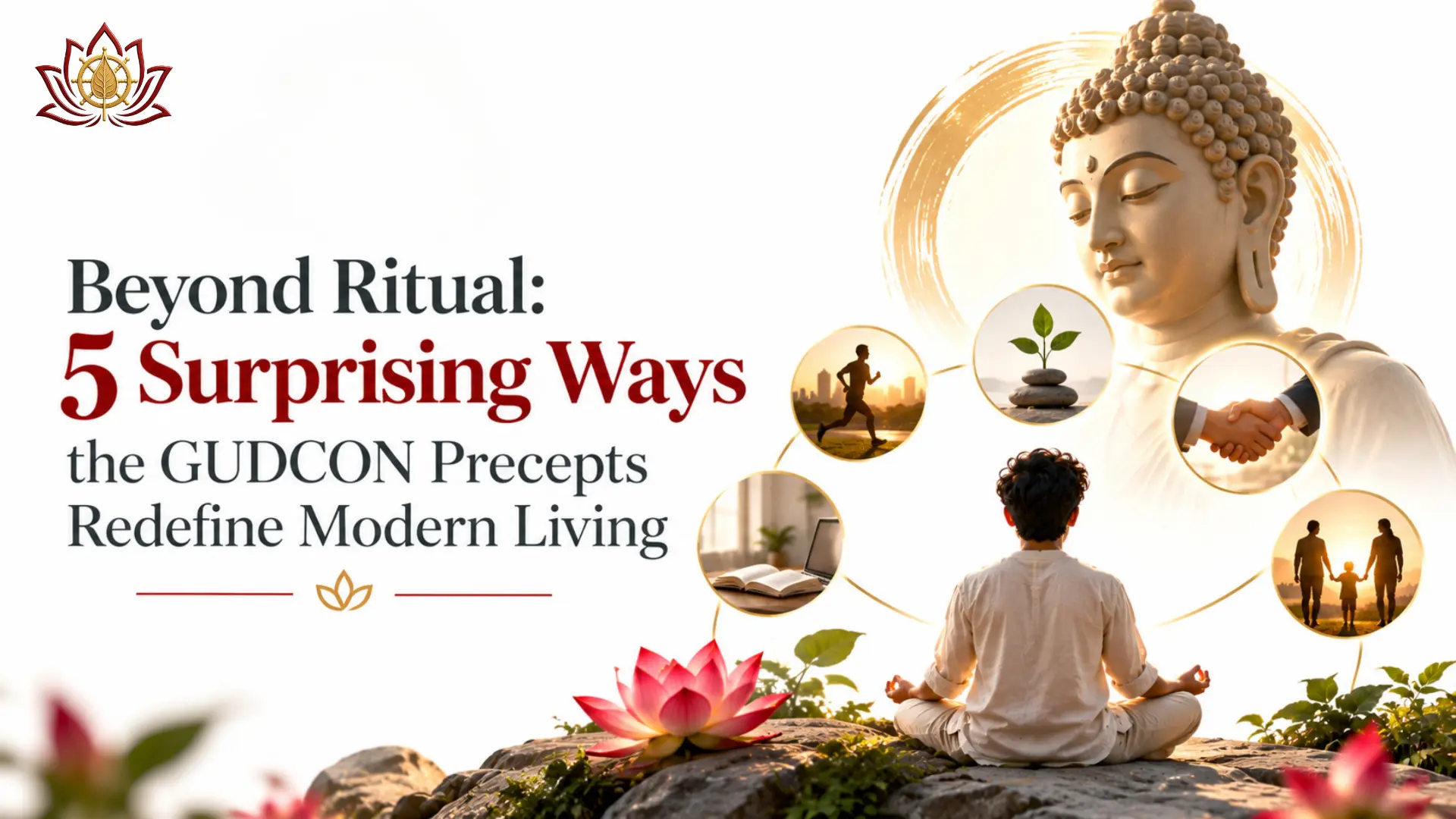
The first revolution GUDCON facilitates is the dismantling of the "ceremonial" mindset. Traditionally, spirituality is often boxed into specific hours, rituals, or the recitation of forgotten languages. GUDCON argues that this "ritualized" approach creates a barrier to entry, making Dhamma feel like a Sunday obligation rather than a metabolic shift in how we live. This movement champions Pakhanda Muktiliberation from superstitionproposing that the sacred is found not in the ceremony, but in the quality of one's consciousness.
This shift is transformative because it relocates the "temple" to the mind itself. Through Buddha Chintan (contemplation) and Dhamma Prachar (spreading wisdom), GUDCON emphasizes that transformation is an active process of right thinking and right action in the crucible of daily lifeat work, in conflict, and in silence.
"
Dhamma is not a ritual; it is right thinking, right action, and right meditation."
By treating Dhamma as a verb, GUDCON eliminates the friction between "spiritual life" and "normal life." It suggests that every interaction is an opportunity for practice, turning the mundane into a field of Sadhana.
2. The Art of "Non-Clinging" (Not Non-Having)
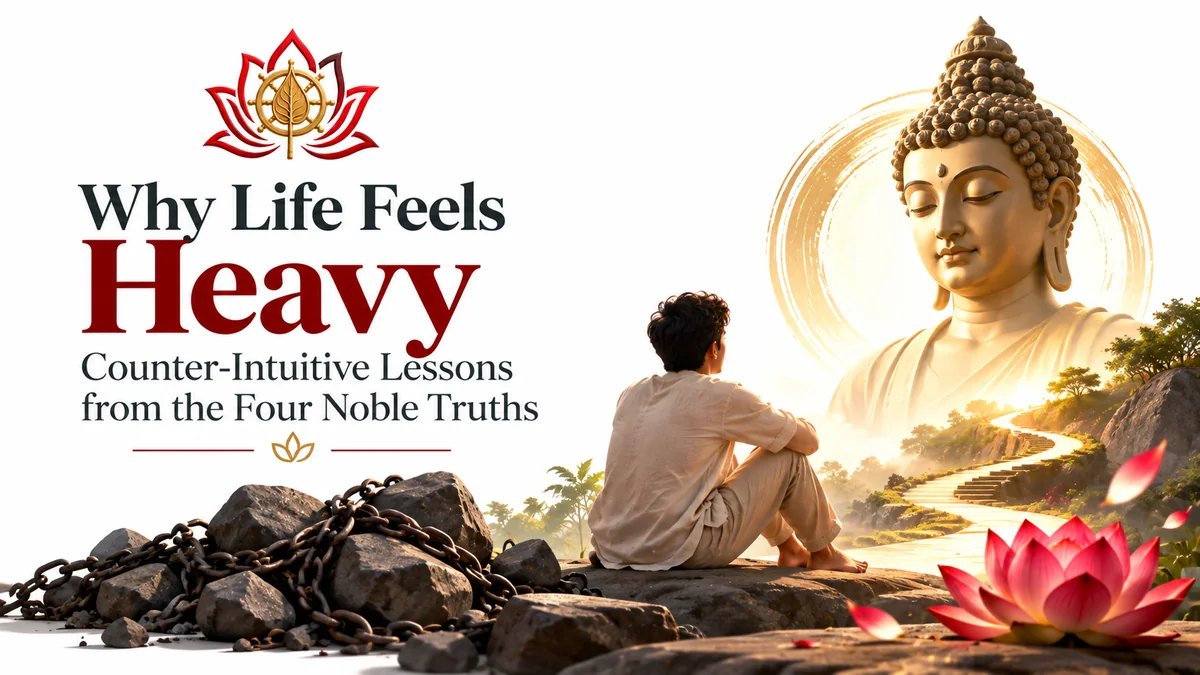
A pervasive myth in modern spirituality is that peace requires the abandonment of ambition or possessions. GUDCON provides a sophisticated distillation of the Four Noble Truths, clarifying that the source of Dukha (suffering) is not the object we possess, but the mind’s psychological "clinging" to it. Suffering is not an external force; it is an internal reactiona friction created when we demand that reality conform to our attachments.
The "lightness of mind" GUDCON advocates for is not about emptiness, but about non-reactivity. When we stop the internal act of clinging, we develop the capacity to participate in the world fully without being shattered by its inevitable fluctuations. This is the difference between "leaving things" and "stopping the clinging."
"
Suffering doesn't come from outside. It arises when the mind clings to something."
In an instant-gratification culture, this insight is a radical act of rebellion. It suggests that peace is a byproduct of psychological flexibility. By understanding that "when the mind stops clinging, it becomes light," seekers can navigate modern complexity with a sense of equanimity that isn't dependent on external success.
3. Radically Self-Sufficient Trust
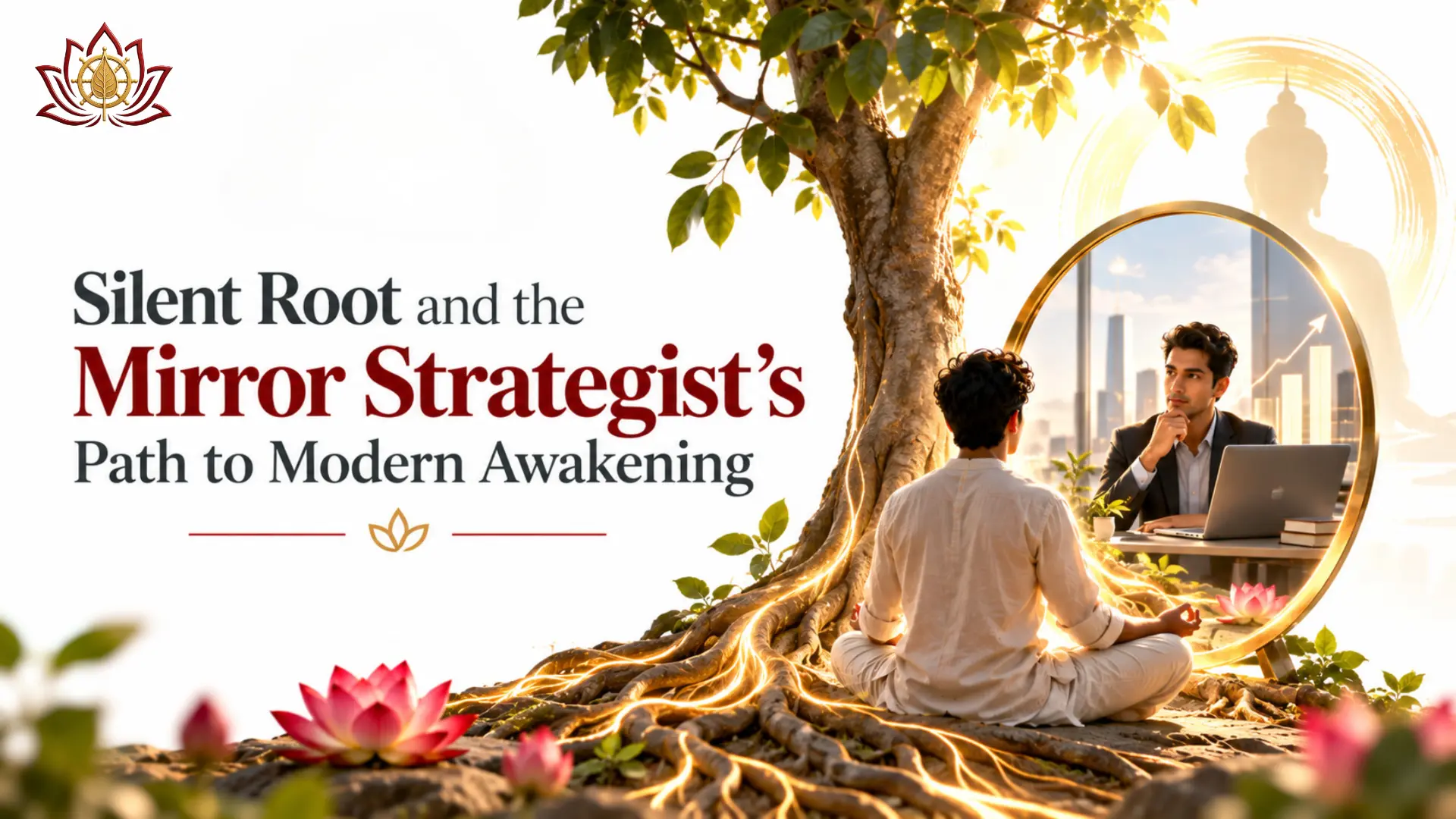
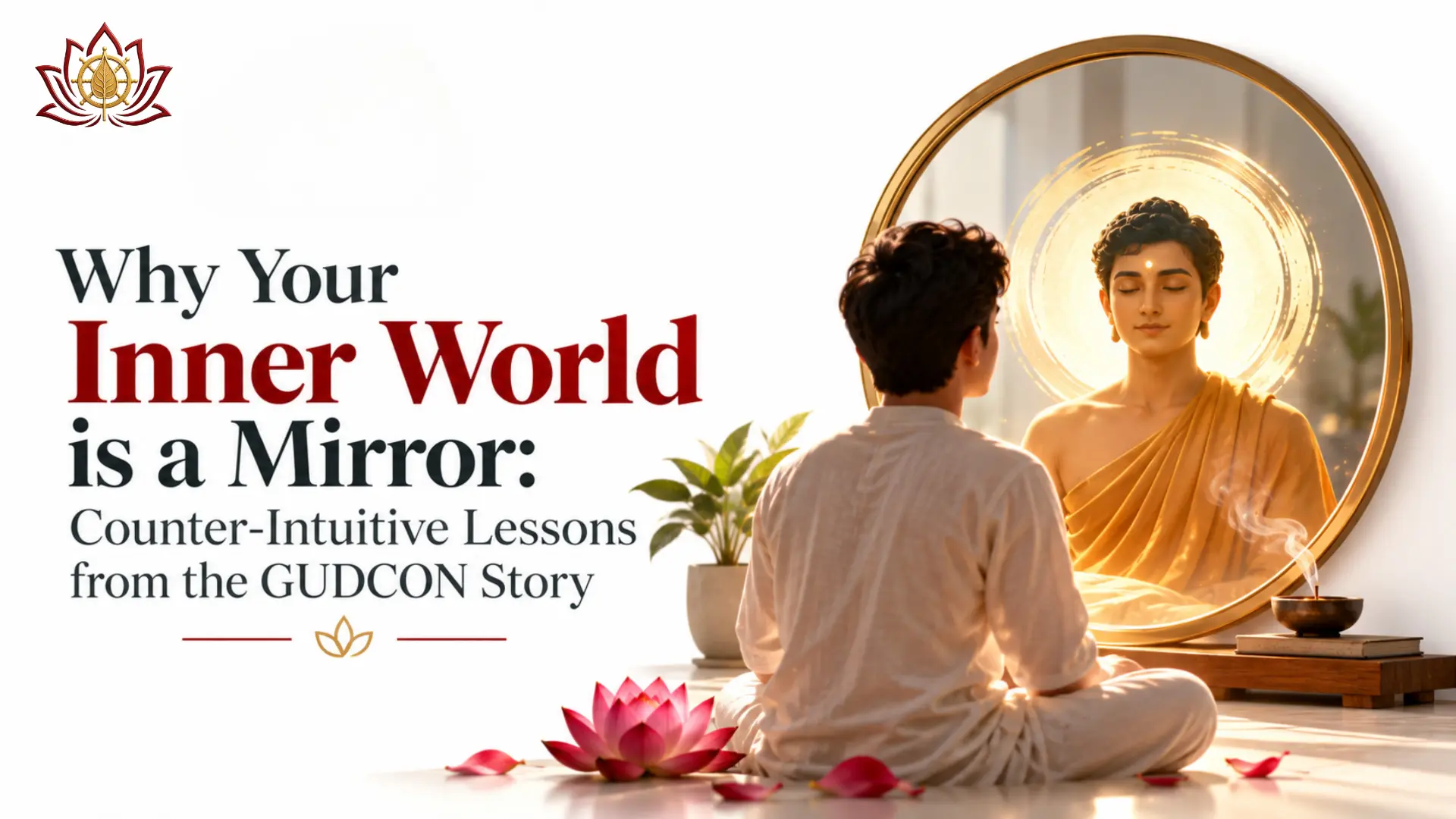
Perhaps the most profound insight found in the GUDCON archives is the concept of the universe as a mirror. In a world obsessed with external validationthe "likes," the titles, the competitive comparisonGUDCON proposes a return to radical self-trust. The transcriptions of GUDCON’s teachings suggest that real defeat is never external; it is the moment we doubt our own voice and prioritize the "distorted mirrors" of others' opinions over our own lived truth.
Trust, in this context, is not a motivational slogan. It is a deep internal state that acknowledges our human vulnerability. As the teachings suggest, one must have the courage to say, "
I am broken, but I am not wrong." It is the move from egothe desire to be better than othersto trust, which is the realization that you are enough. This is illustrated by the powerful metaphor: A fish cannot be judged by its ability to climb a tree. To adopt this trust, one must undergo three fundamental shifts:
1. From Reaction to Choice: Moving from being a puppet of external triggers to a conscious author of one's responses.
2. From Comparison to Uniqueness: Recognizing that comparison is the thief of peace and that your path is inherently individual.
3. From External Validation to Internal Resonance: Understanding that the universe reflects your internal state of trust, not your external performance of "confidence."
4. The "Bamboo" Growth Strategy
Modern society is addicted to the "overnight success" narrative, yet GUDCON advocates for the counter-intuitive growth modeled by the Five-Year Bamboo. For four years, a bamboo seed shows no visible growth above ground. To the untrained eye, it appears stagnant. However, it is busy cultivating a massive, complex root system. In the fifth year, it explodes upward, growing several feet in weeks.
This is GUDCON’s model for Sadhana. The movement prioritizes "roots-first" development, where the roots consist of daily study of the Tripitaka scriptures, meditation, and the ethical foundation of Panchsheel (the Five Precepts: non-violence, truthfulness, moral conduct, non-stealing, and non-intoxication). Without these roots, a tall tree falls in the first storm of life.
Internal preparation is the foundation for external flight.
GUDCON’s commitment to this slow, deep growth is reflected in its "
Namo Buddhay Movement" and its 90-day growth path (0 → 5 → 10... active practitioners). It values the "hidden years" of practice, understanding that real spiritual authority is grown in the dark, through discipline and accountability, long before it is visible to the world.
5. Redefining Prayer as Presence
In many traditional contexts, prayer is a petitiona request for the universe or a creator to change our circumstances. GUDCON challenges this by redefining prayer as "self-acceptance" and "radical awareness." To ask for things to be different is, in a sense, a rejection of the natural orderor what some might call the "creator’s work."
GUDCON teaches that accepting yourselfincluding your flaws, your fears, and your "brokenness"is the highest form of worship. When the mind is silent, the seeker is no longer making demands; they are simply being. In this state, your silence becomes your highest communication. It is an act of trust in the "now," acknowledging that you are already part of the infinite energy that moves the stars.
"
Your silence is your prayer; your breath is your worship."
By moving away from petitionary demands and toward a "pedagogy of presence," the seeker finds a connection to the sacred that is constant. Every conscious breath becomes a ritual, and every moment of awareness becomes a sacred event, rendering the traditional boundaries between the secular and the divine obsolete.
Conclusion: The Path Forward
GUDCON is emerging as more than a philosophy; it is a blueprint for the "first living Sangha"a community of active, accountable practitioners. Through Purnima Sangati (Full Moon gatherings) and transparent Seva (service), the movement brings mindfulness off the solitary cushion and into the collective experience. It replaces the "guru-disciple" hierarchy with a shared commitment to Dhamma study and ethical living.
The ultimate realization is that the universe is a neutral reflecting surface. It does not support your dreams through luck; it supports the frequency of your trust. If you stand in conflict with yourself, the world will reflect that battlefield. If you stand in acceptance of your own existence, the entire universe stands with you.
If the universe only reflects what you feel within, what is your reflection showing you today?
“Your silence is your prayer; your breath is your worship.”
Published on 12 August 2026 · GUDCON