Published on 11 November 2026 2,031 views
Beyond Empty Routines: The Brahmin’s Lamp and the Secret to Purposeful Action Many of us navigate modern life trapped in rigid, repetitive routines. We go through the daily motions of work, habits, a
Shifting from mindless repetition to purposeful living does not require abandoning your daily life; it requires transforming how you engage with it. Whether through the Brahmin's lamp, the patient settling of muddy river water, the emptied teacup, Siddhartha's early compassion, the enduring bronze of Kamakura, or the structured discipline of GUDCON, the underlying truth remains identical: real growth happens from the inside out. When external routines are animated by internal virtue, patience, humility, and moral clarity, mechanical habits dissolve into meaningful awareness. By letting go of
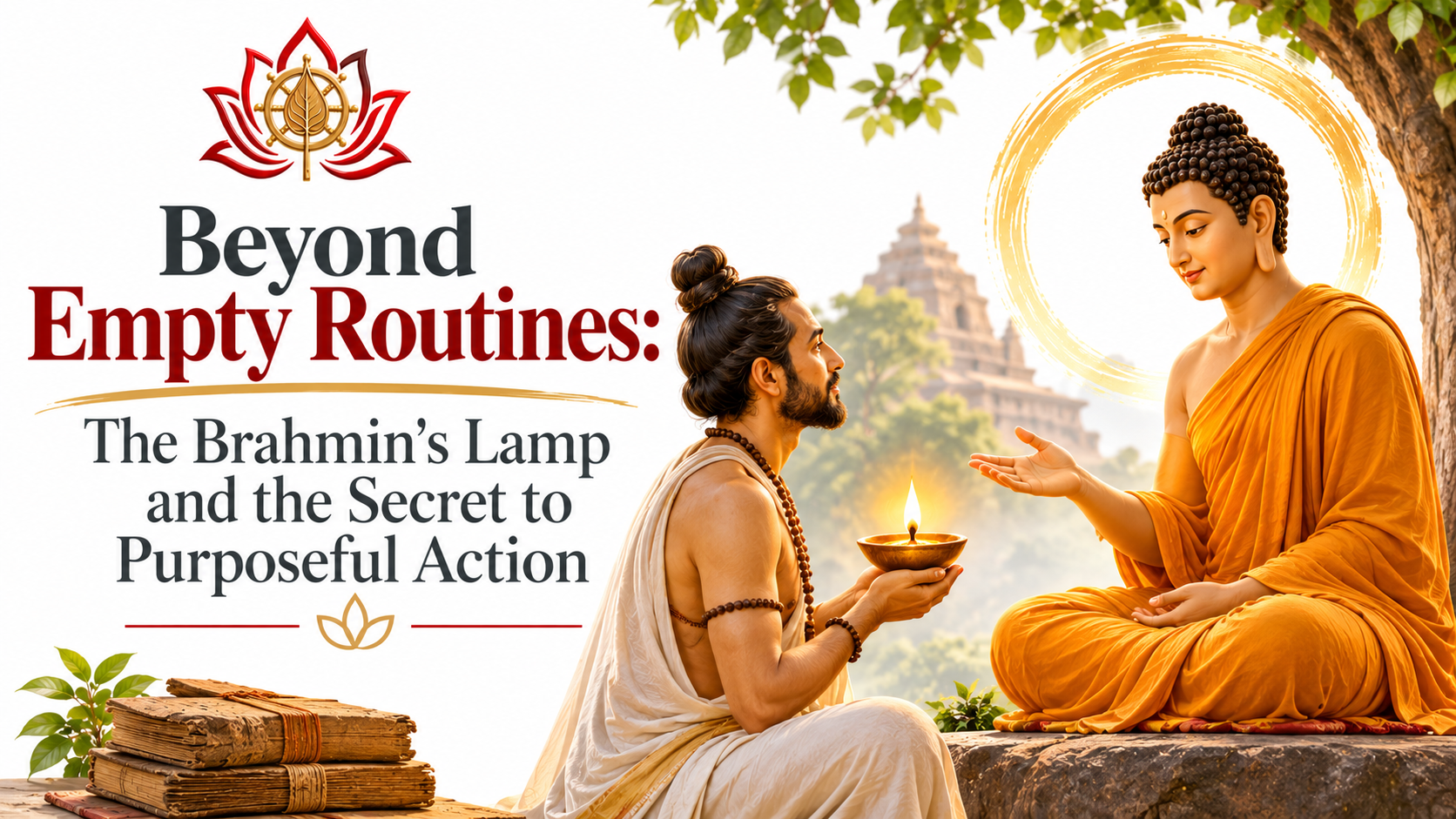
Beyond Empty Routines: The Brahmin’s Lamp and the Secret to Purposeful Action
Many of us navigate modern life trapped in rigid, repetitive routines. We go through the daily motions of work, habits, and even spiritual practices, yet find ourselves feeling stagnant, anxious, or unfulfilled. We attend rituals, recite goals, or chase productivity hacks, but the inner transformation and peace we seek remain out of reach.
The root of this frustration lies in passive routine—acting out external behaviors without understanding their deeper purpose or internalizing their essence. When spiritual practices or daily habits turn into empty mechanical motions, they lose their power to clarify the mind, discipline the spirit, or heal suffering.
Ancient parables from Buddha, Zen traditions, historical landmarks, and modern contemplative frameworks like the Global Union of Dhamma Contemplation (GUDCON) offer a practical antidote. By shifting our perspective from external ritual to embodied awareness, these teachings reveal how we can transform mindless repetition into purposeful, transformative action.
1. True Devotion is Embodied Virtue, Not External Ritual (The Parable of the Brahmin's Lamp)
A merchant Brahmin once approached Buddha after spending years worshipping deities without ever experiencing a divine presence or vision. Observing the Brahmin’s distress, Buddha offered an analogy using a burning lamp. He asked the Brahmin what he saw when he looked at the flame. The Brahmin replied that he saw the flickering flame, its physical shape, and its vibrant colors.
Buddha explained that focusing solely on the flame’s visible form misses its true quality and function (dharma): the light it casts to dispel darkness. In the same way, simply bowing before an image or worshipping an idol without internalizing divine qualities means missing the true essence of devotion.
"You see the form of God, you worship it, but you do not embody the virtues of that God within yourself; that is why you do not experience the divine. Divine grace comes from internalizing the teachings and deeds, practicing virtuous conduct (sadkarm), and embodying those behaviors throughout your entire life."
Analytical Reflection: This teaching presents a profound truth: spiritual fulfillment does not result from performing mechanical rituals for a deity. True worship is not an external show; it requires actively embodying the qualities of light, wisdom, and moral virtue in everyday interactions. Outer forms remain meaningless unless translated into living, practical goodness that dispels darkness within.
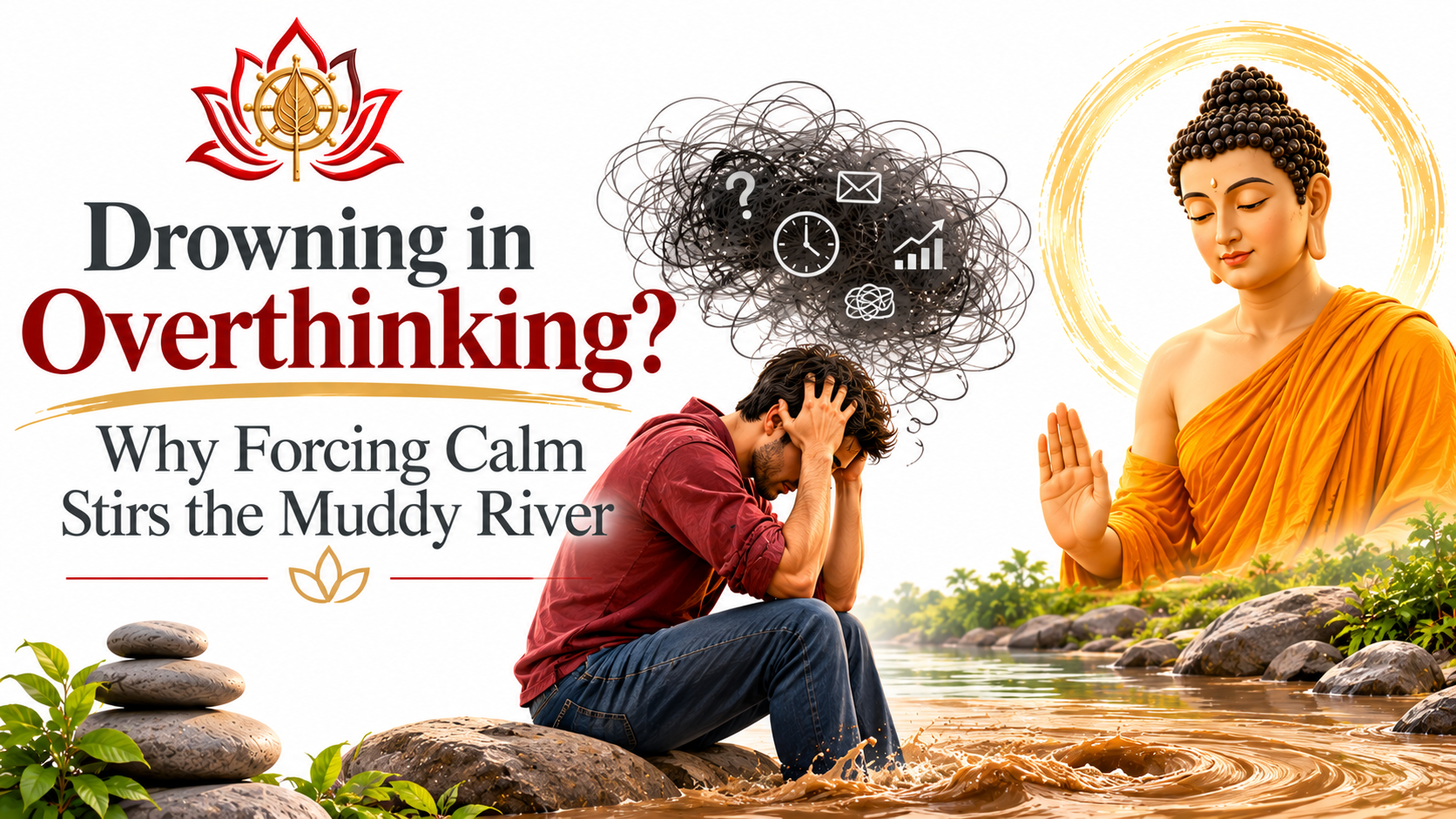
2. Stop Forcing Clarity—Let the Mud Settle (The Wisdom of the Dirty River)
While traveling with his disciples, Buddha stopped near a river to drink water, only to find it thick with mud and unfit for consumption. While most of the disciples chose to walk ahead without drinking, one disciple decided to wait at the riverbank. Rather than trying to filter or stir the dirty water, he sat in quiet patience. Over time, the heavy silt naturally settled to the bottom, leaving crystal-clear water.
When the disciple returned after drinking, Buddha smiled and asked why he had delayed. The disciple explained that patience alone had cleared the water. Buddha used this simple moment to deliver a vital lesson on emotional regulation:
"Just like this river water, when the mind gets dirty—filled with anger, anxiety, jealousy—do not try to clean it by force. Just sit quietly, give it time. Everything will arrange itself naturally."
Analytical Reflection: When emotional turbulence hits, our default reaction is often to agitate the mind further by desperately trying to fix, analyze, or suppress our feelings. However, forceful intervention during inner chaos only stirs up more mental sediment. Patience (sabr) serves as the true medicine. By remaining still and granting time its place, emotional agitation subsides naturally, allowing clarity and truth to surface without struggle.
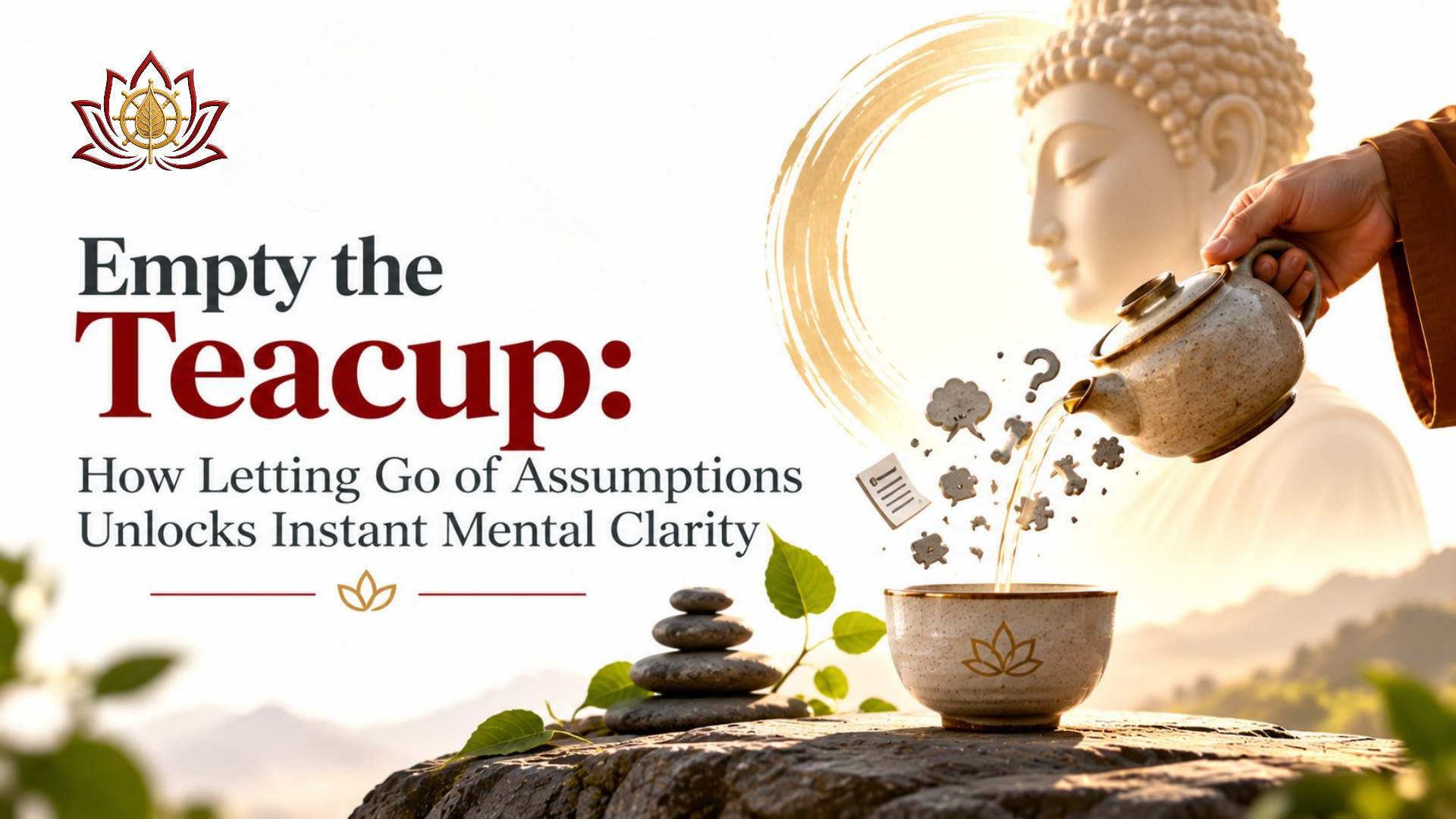
3. You Must Empty Your Cup Before Filling It (Zen Master Nan-in’s Tea Lesson)
A university professor once visited the renowned Zen Master Nan-in—a great devotee of Buddha—to learn about Zen philosophy. As soon as they sat down, the professor began speaking endlessly, displaying his extensive knowledge of Zen history, books, and theories. Master Nan-in listened quietly while preparing a pot of tea.
Nan-in began pouring tea into the guest's cup. He filled it to the brim, but instead of stopping, he kept pouring. Tea spilled over the rim, running across the table. Unable to contain himself, the professor burst out, "Master! The cup is full, no more will go in!" Nan-in smiled and replied:
"Like this cup, your mind is full of opinions, prejudices, and previously learned things. Until you empty it, how can new knowledge or Zen enter you?"
Analytical Reflection: Intellectual entitlement and rigid assumptions create an invisible boundary that stops personal transformation before it begins. When we approach life already full of our own opinions, overthinking, and ego, we leave no space to receive genuine wisdom. Growth demands the courage to unlearn—emptying our mental cup so that fresh, lived understanding can enter.
4. Impermanence is Life’s Greatest Teacher of Compassion (Siddhartha’s Childhood Awakening)
Long before he attained enlightenment, Prince Siddhartha experienced a pivotal moment at around five or six years old while walking in a garden with his father, King Suddhodana, and his uncle. Suddenly, he watched a hawk swoop down, seize a small fish in its talons, and fly away. Siddhartha observed the fish struggling desperately until its breathing stopped.
Deeply moved to tears, young Siddhartha sat quietly beneath a tree and pondered the delicate nature of life, asking why beautiful things end so quickly. This marked his very first realization of life's impermanence (anicca) and pervasive suffering (dukkha). In that quiet moment, he understood that suffering is not merely reserved for the poor, but is the companion of every living creature.
Analytical Reflection: Recognizing that all things are temporary (anicca) does not lead to despair or fatalism; rather, it serves as the foundational seed for deep empathy. Realizing that suffering touches every living creature sparks active compassion (karuna) and loving-kindness (maitri). Understanding life's fragile brevity compels us to treat every being with immediate dignity, care, and intentional presence.
5. Inner Peace Stands Unmoved When External Structures Fall (The Great Buddha of Kamakura)
In Kamakura, Japan, stands a massive 13-meter bronze statue of the Buddha, cast in 1252 AD. Originally, this grand monument was housed inside a magnificent wooden temple hall. However, during the 14th and 15th centuries, severe natural disasters struck the region. In 1369 and again in 1498, devastating tsunamis, earthquakes, and typhoons completely destroyed and swept away the surrounding temple halls.
Yet, amidst the destructive chaos, the bronze Buddha remained completely unmoved. Today, the statue stands in the open air, depicted in a state of serene meditation with half-closed eyes, symbolizing composure amidst worldly instability.
Analytical Reflection: The Kamakura Buddha serves as a striking physical metaphor for resilience. Worldly structures, possessions, and external circumstances are impermanent and easily washed away by life's inevitable tsunamis. However, an inner core of tranquil awareness and spiritual grounding cannot be destroyed. True peace is not the absence of external storms, but an unshakeable quiet within them.
6. Moving Beyond Hypocrisy Through Systemic Practice (The GUDCON Framework)
Spiritual practice often risks degenerating into empty hypocrisy (pakhandwad) when moral principles are disconnected from daily habits. To overcome this, the Global Union of Dhamma Contemplation (GUDCON) offers a practical framework that integrates devotional affection (bhakti), strict ethical discipline, and rational study to guide practitioners toward liberation (Nirvana).
The GUDCON framework is structured around key operational pillars and symbolic foundations:
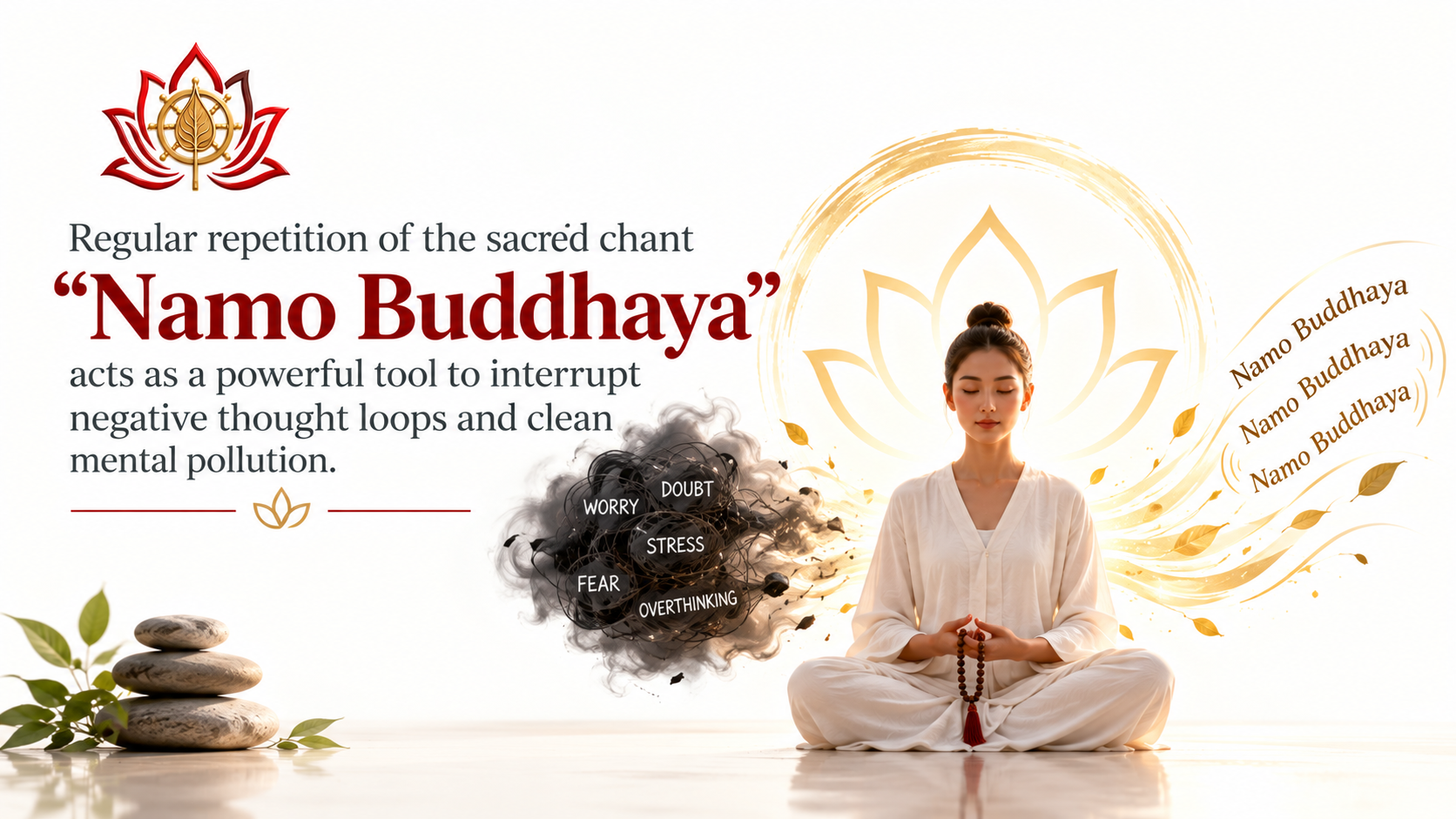
* The Four Noble Truths & Eightfold Path: Recognizing the reality of suffering (dukkha), its root cause in desire and attachment (samudaya), its complete cessation (nirodha), and the practical path to freedom (magga / Eightfold Path of right view, thought, speech, action, livelihood, effort, mindfulness, and concentration). * Panchsheel (The Five Precepts): Establishing clear ethical boundaries for mental clarity and discipline: 1. Ahimsa (Non-violence towards all living beings) 2. Asteya (Non-stealing and living with honesty) 3. Brahmacharya (Refraining from sexual misconduct) 4. Satya (Truthfulness and avoiding falsehood) 5. Sura-meraya-majja-pamadatthana (Abstinence from alcohol and intoxicants to maintain mental clarity) * Devotional Sankirtan & The Namo Buddhaya Movement: Engaging in Sankirtan (devotional singing and chanting dedicated to Buddha) to cultivate love and deep affection for Buddha as the supreme spiritual guide. Through the global Namo Buddhaya Movement, practitioners spread these teachings of humility, politeness, and love across India and the world. * Arpan (Sacred Sustenance): The daily practice of consuming Arpan—pure vegetarian food that has been offered to Buddha—integrating physical nourishment with inner devotion and purity of consciousness. * Textual Study & Sacred Mantra Recitation: Daily reading of the Tripitaka scriptures—the Vinaya Pitaka (rules of conduct), Sutta Pitaka (discourses), and Abhidhamma Pitaka (philosophical analysis)—to replace ignorance with logic and insight. This is paired with the continuous chanting of the core spiritual mantra:
"Namo Buddhaya Namo Buddhaya, Buddhaya Buddhaya Namo Namo" "Namo Dhyanam Namo Karmam, Buddham Buddham Namo Namo"
* Visual Symbolism of the GUDCON Emblem: GUDCON expresses its philosophical vision through a sacred tri-fold logo featuring three core elements: * The Red Lotus Flower: Symbolizing mental purity blooming untainted above muddy waters. * The Golden Dhamma Wheel (Dharmachakra): Representing the Eightfold Path and continuous spiritual progress. * The Central Bodhi Leaf: Symbolizing deep contemplation, wisdom, and awakening.
Analytical Reflection: Transforming mechanical routine into deliberate living requires an all-encompassing system. By uniting rational scriptural study, strict moral boundaries (Panchsheel), sacred daily habits (Arpan), and devotional singing (Sankirtan), practitioners eliminate superficial hypocrisy (pakhandwad). Visualizing the lotus, wheel, and leaf reminds us that internal devotion and external action must blossom together to achieve true awakening.
“As you go about your day, ask yourself: Are your daily habits and routines serving as empty mechanical rituals, or are they living expressions of the light, patience, and virtue you wish to bring into the world?”
Published on 11 November 2026 · GUDCON