Published on 18 November 2026 2,700 views
Drowning in Overthinking? Why Forcing Calm Stirs the Muddy River
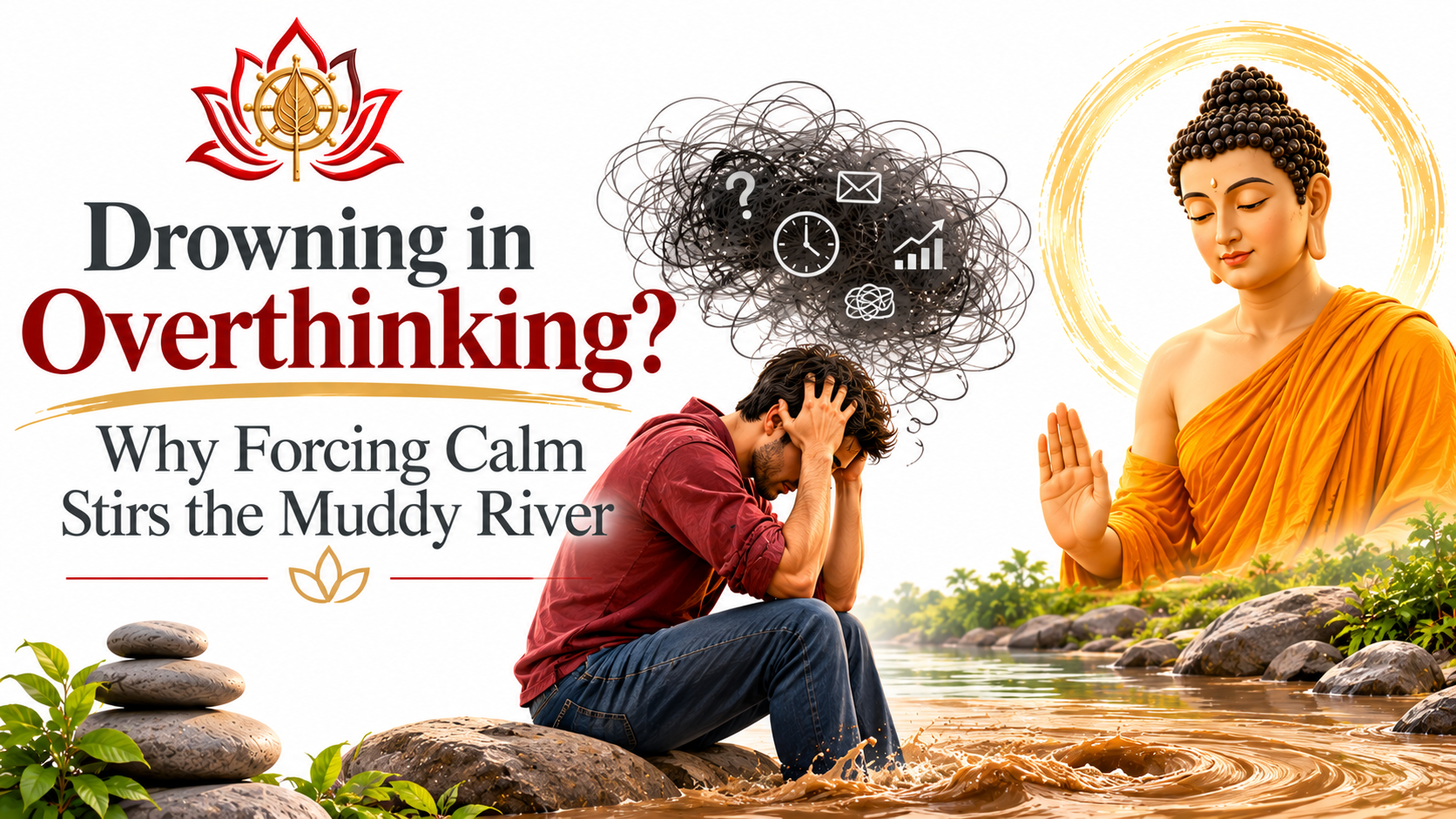
Achieving a quiet, resilient mind does not come from aggressively fighting your thoughts or forcing yourself to feel calm. As these timeless allegories and structured practices show, true mental clarity requires a fundamental shift in how we relate to our internal turbulence: * Patience over Force: Allow your mind time to let its emotional mud settle naturally. * Humility over Ego: Empty your intellectual cup of overthinking and assumptions so new wisdom can enter. * Virtue over Ritual: Internalize divine ethics (sadkarma) in daily actions rather than focusing solely on external appearances.
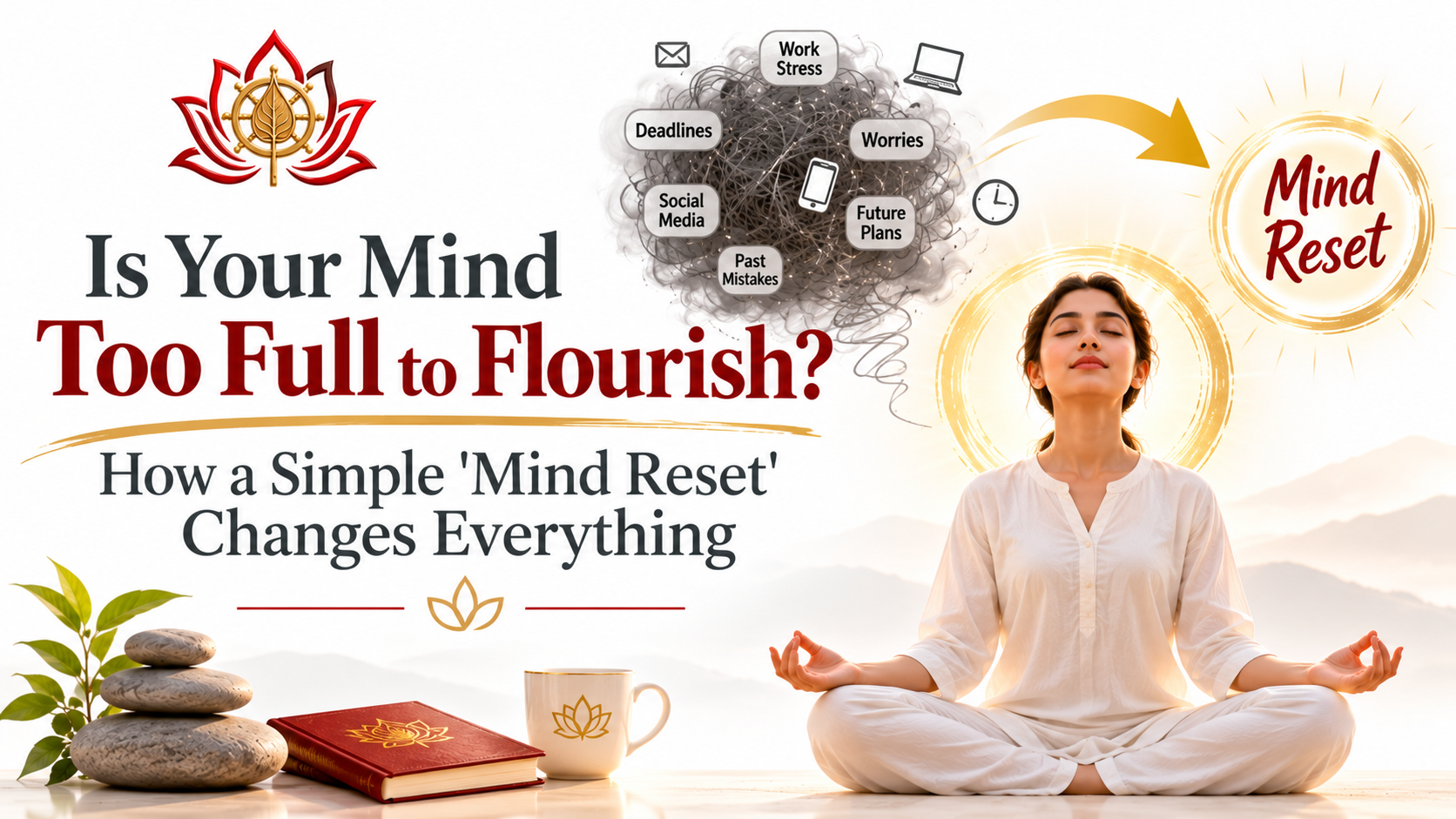
When an overactive, anxious mind takes over, our default response is often to wage war against our own thoughts. We demand quiet, aggressively attempt to suppress stress, and try to force ourselves into a state of calm. Yet, as anyone who has wrestled with late-night anxiety knows, the harder you fight mental noise, the louder and more overwhelming it becomes.
This counter-productive struggle happens because genuine mental clarity cannot be achieved through sheer force. Trying to scrub a chaotic mind clean through willpower alone is like trying to clear a muddy river by thrashing around in the water—it only stirs up more silt.
Ancient Buddhist allegories and structured spiritual traditions, such as the GUDCON (Global Union of Dhamma Contemplation) framework, offer a radically different approach. Instead of fighting internal chaos, these teachings invite us to shift our perspective on patience, intellectual clutter, virtue, impermanence, and discipline. Here are five profound takeaways that reveal how to find genuine clarity without forcing calm.
Takeaway 1: Stop Stirring the Water — The Art of Letting the Mud Settle
While traveling with his disciples, the Buddha stopped by a river to get a drink of water. However, the water was thick with churned-up mud and sediment, making it completely undrinkable. Most of the disciples abandoned the river and continued walking, but one disciple chose to stay behind. He sat quietly along the riverbank and waited. Over time, without any intervention, the mud naturally settled to the bottom, leaving the water crystalline and clear. The disciple drank his fill and returned to the Buddha, who asked why he had delayed. The disciple explained that rather than drinking dirty water, he simply gave it time to clear itself.
The Buddha used this moment to deliver a vital lesson on emotional regulation: when your mind is clouded with anger, anxiety, or jealousy, attempting to forcibly clean or fix it will only agitate your thoughts further. The solution is not aggressive effort, but quiet presence and patience, allowing mental noise to organize and settle naturally.
Our modern bias toward constant action makes sitting still feel counter-intuitive. When negative emotions surface, we instinctively rush to analyze, suppress, or fix them, which keeps the emotional silt suspended in our consciousness. Practicing non-interference allows psychological turbulence to subside on its own terms.
"Have patience, time is the greatest medicine. Decisions made in haste go wrong; patience reveals the right path."
Takeaway 2: Empty Your Cup — Why Your Mind Can't Learn What It Thinks It Knows
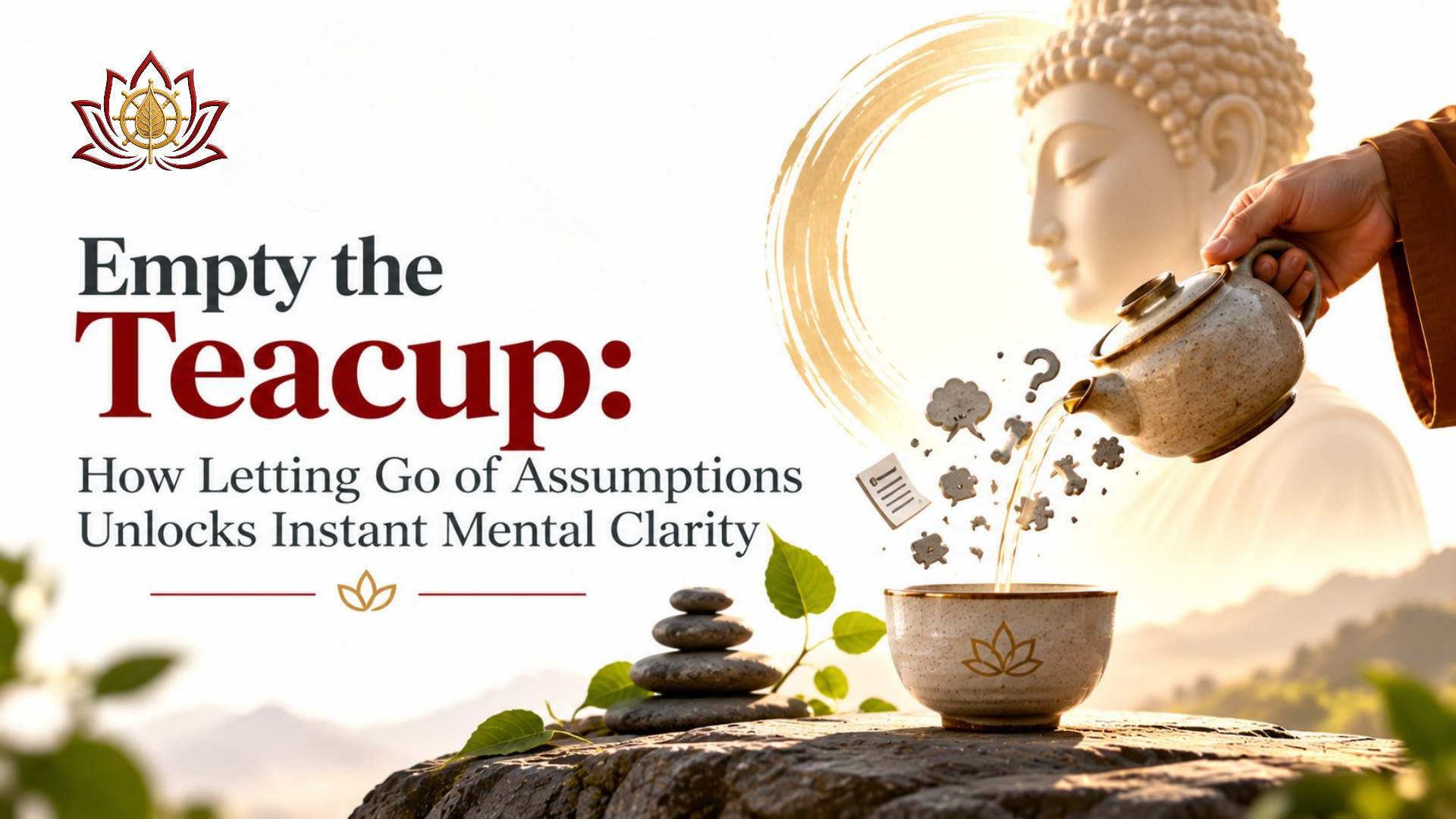
A well-read university professor once visited the Zen Master Nan-in to learn about Zen philosophy. The moment he arrived, the professor began speaking endlessly, analyzing Zen history, quoting books, and lecturing on various theories. Nan-in listened silently while preparing tea. He filled the professor's teacup to the brim and then continued pouring. As tea overflowed the cup, spilling across the saucer and onto the table, the professor finally shouted, "Master! The cup is full! No more will go in!"
Nan-in set the teapot down, smiled, and delivered his lesson. He explained that, much like the overflowing teacup, the professor's mind was completely crammed with pre-existing theories, ego, assumptions, and accumulated information. Until he emptied his mind of those prior concepts, no new insight or Zen understanding could ever enter.
In an era defined by constant information consumption, we frequently suffer from cognitive overload and intellectual rigidity. True learning and mental clarity require active unlearning. When we approach life believing we already have all the answers, our internal cup remains full, preventing new perspectives and deeper wisdom from taking root.
"Just like this cup, your mind is full of thoughts, prejudices, and previously learned things. Until you empty it, how can new knowledge or insight enter you?"
Takeaway 3: Look for the Light, Not Just the Lamp — True Worship as Internalized Virtue
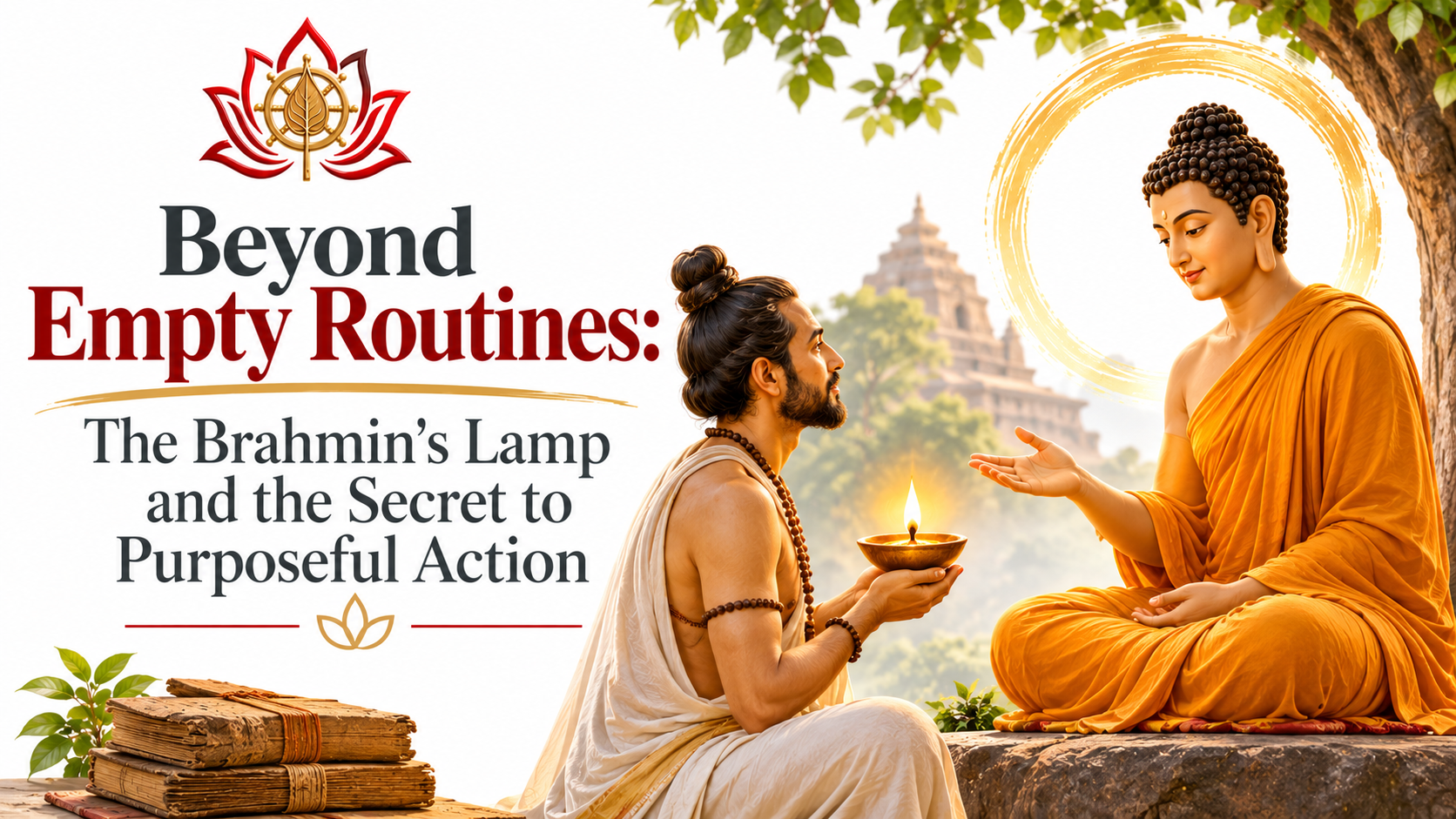
A merchant Brahmin who spent decades performing formal religious prayers once approached the Buddha, expressing deep frustration that he had never experienced a direct vision or realization of the Divine. The Buddha responded by asking the merchant what he observed when looking at a burning lamp. The Brahmin replied that he saw the physical flame and its flickering colors.
The Buddha pointed out that the merchant saw only the external form and body of the lamp, completely overlooking its true property (guna)—the light it emits that dispels darkness, which represents its core function (dharma). Translating this to spiritual practice, the Buddha explained that merely bowing before a physical image or performing ritualistic worship without embodying divine virtues, living out sacred teachings, and engaging in good deeds (sadkarma) will never bring about true divine realization.
This shift moves spirituality away from external performance and directly into internal character development. Rituals without virtue remain empty. Real transformation occurs only when we internalize principles of truth, moral conduct, and active compassion into our daily lives.
Takeaway 4: Built to Survive Tsunamis — Unshakable Peace in an Impermanent World
In Kamakura, Japan, stands the Great Buddha (Kamakura Daibutsu), a massive 13-meter bronze statue cast in 1252 AD. Throughout the 14th and 15th centuries, severe earthquakes, tsunamis, and violent storms repeatedly battered the region. In both 1369 and 1498, powerful storms completely destroyed the massive wooden temple halls surrounding the statue. Yet, the bronze Buddha remained standing in the open air, utterly unyielding. With its eyes half-closed and posture serene, the statue remains an enduring symbol of unshakable inner peace amidst an ever-changing, impermanent world (anityata).
This physical embodiment of resilience echoes a foundational event from Siddhartha Gautama's childhood. Around age five or six, while playing in a garden with his father, King Suddhodana, and his maternal uncle, young Siddhartha watched a hawk swoop down and seize a struggling fish in its beak. Within moments, the fish stopped breathing. Siddhartha sat silently beneath a tree with tears in his eyes, realizing for the first time that everything in nature is fleeting, and that suffering (dukkha) touches all living beings.
Physical structures, relationships, status, and environments are inherently temporary. The Kamakura statue demonstrates that while external structures inevitably fall away, an internal mind rooted in awareness, calm, and understanding can withstand life's violent tsunamis.
Takeaway 5: Integrating Devotion and Discipline — The GUDCON Approach to Liberation
To achieve complete freedom from mental suffering (jeevanuddhar), the Global Union of Dhamma Contemplation (GUDCON) offers a structured spiritual roadmap. Rather than relying solely on abstract theory, GUDCON integrates heartfelt emotional devotion (Bhakti) with logical study and rigorous ethical guidelines.
This balanced approach rests on core pillars designed to purify consciousness and cultivate peace (Nirvana):
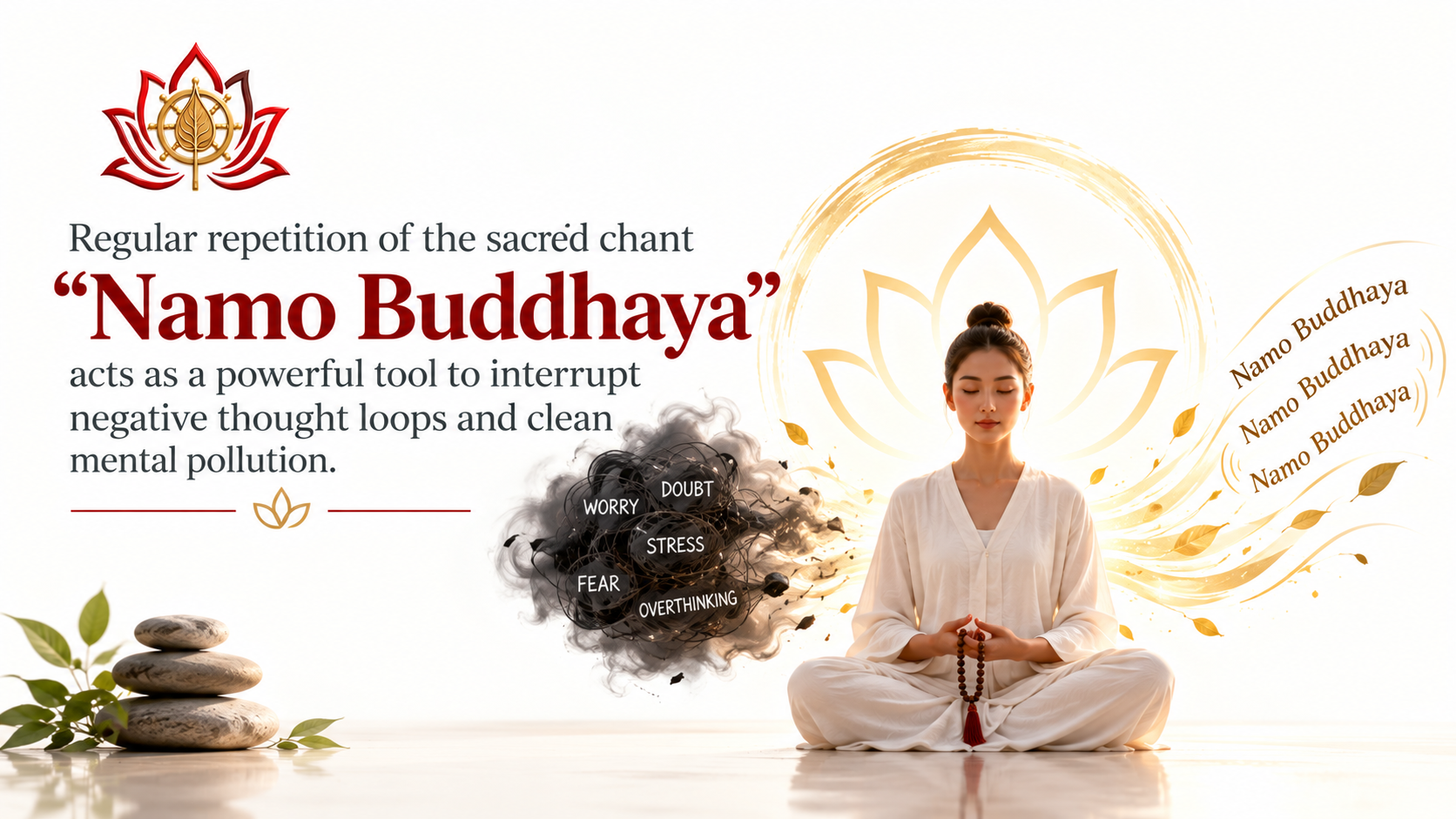
* Devotional Practice (Bhakti & Sankirtan): Engaging in devotional music, spiritual love, and continuous recitation of the sacred mantra to purify consciousness and connect with divine energy:
"Namo Buddhaya Namo Buddhaya, Buddhaya Buddhaya Namo Namo" "Namo Dhyanam Namo Karmam, Buddham Buddham Namo Namo"
* Logical Study (Tipitaka): Eliminating ignorance and blind superstition through daily study of the three sacred divisions: * Vinaya Pitaka: Rules of conduct and discipline. * Sutta Pitaka: Direct discourses and teachings of the Buddha. * Abhidhamma Pitaka: Deep philosophical analysis. * Core Truths & The Eightfold Path: Contemplating the Four Noble Truths—recognizing suffering (Dukkha), its cause in desire (Samudaya), its cessation (Nirodha), and the Eightfold Path (Ashtangika Marga) leading to ultimate peace (Nirvana). * Ethical Principles (Panchsheel): Maintaining mental clarity through five foundational moral guidelines: 1. Non-violence (Ahimsa): Refraining from harming living beings, reducing anger, and showing kindness to all. 2. Non-stealing (Asteya): Living honestly without taking what is not given. 3. Marital Fidelity / Celibacy (Brahmacharya): Avoiding sexual misconduct and honoring commitments. 4. Truthfulness (Satya): Speaking truthfully and refraining from deceit. 5. Abstaining from Intoxicants (Sura-meraya-majjapamadatthana): Avoiding alcohol and drugs to preserve unclouded mental awareness.
By combining devotional practice with clear moral ethics and rigorous study, GUDCON provides a practical system to clear psychological clutter, eliminate superstition, and awaken active compassion (karuna) and loving-kindness (maitri).
“The next time your mind feels like a muddy river, will you keep stirring the water—or will you have the courage to sit quietly and let it settle?”
Published on 18 November 2026 · GUDCON