Published on 3 November 2026 966 views
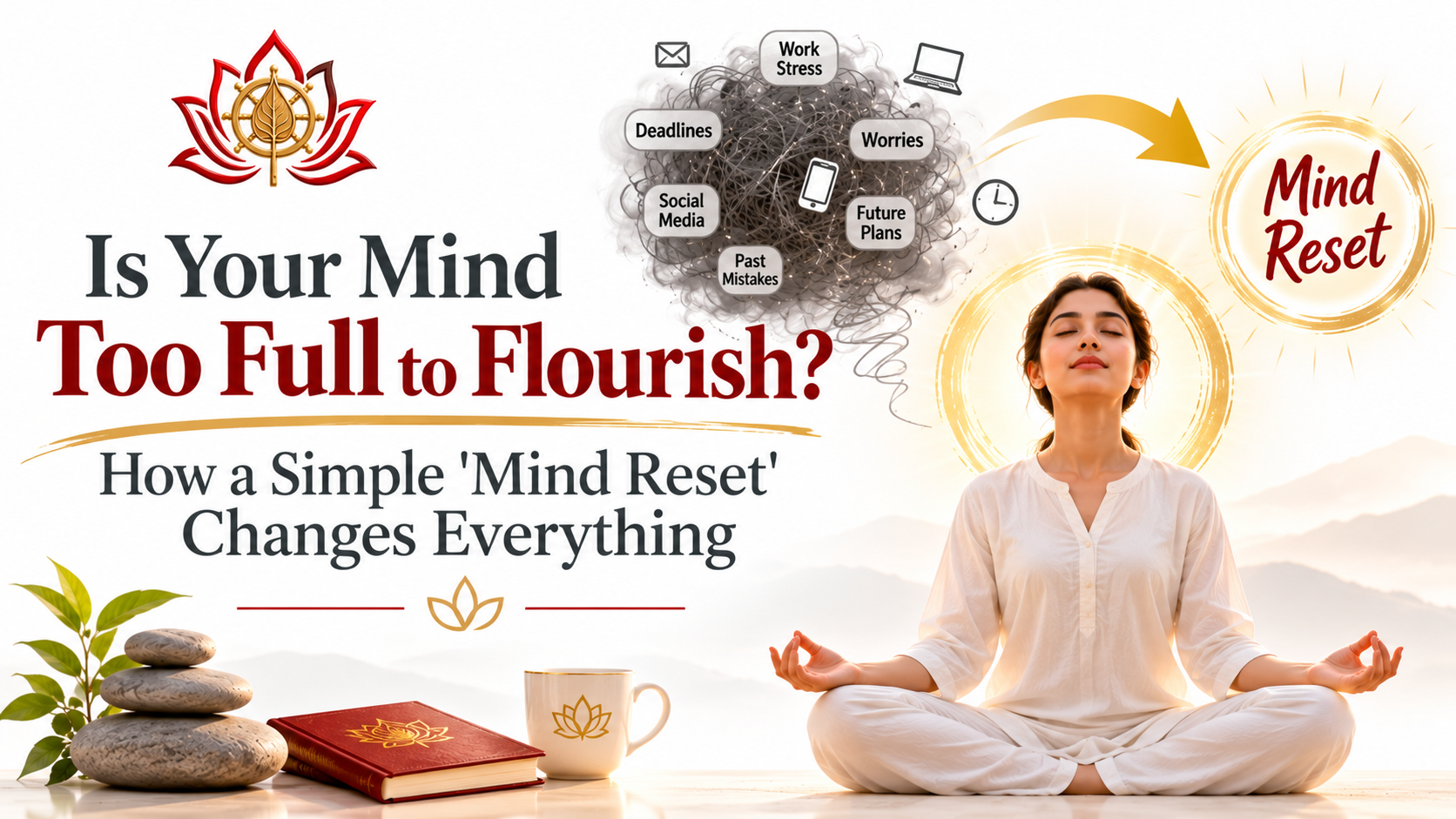
Is Your Mind Too Full to Flourish? How a Simple 'Mind Reset' Changes Everything
Achieving a true mind reset is not about acquiring complex techniques or piling on more intellectual knowledge. As these timeless teachings reveal, real transformation happens when we simplify
Which area of your mental life feels most cluttered right now, and what is one opinion, habit, or assumption you can release today to empty your cup? Share your thoughts and reflections in the comments below!
Is Your Mind Too Full to Flourish? How a Simple 'Mind Reset' Changes Everything 1. Introduction: The Trap of the Overflowing Mind
In our hyper-connected world, many of us live in a state of perpetual mental overload. We spend our days navigating crammed schedules, endless digital streams, emotional volatility, and an unrelenting undercurrent of overthinking. When stress, anxiety, or anger inevitably surge, our anxious instinct is often to hoard more information mistaking increased mental intake for emotional resolution. We try to solve a crowded mind by filling it further.
However, timeless wisdom synthesized across classic Buddhist parables and spiritual traditions offers a radically different path: a profound, transformative "Mind Reset." True mental clarity and inner tranquility do not arise from doing more, accumulating more data, or forcefully suppressing troubling thoughts. Instead, real peace emerges when we learn to step back, empty our internal vessel of cognitive clutter, and cultivate an undisturbed inner stillness. By relinquishing the noise, we create the open space required for wisdom, balance, and quiet joy to flourish naturally.
Empty Your Cup Before Trying to Fill It
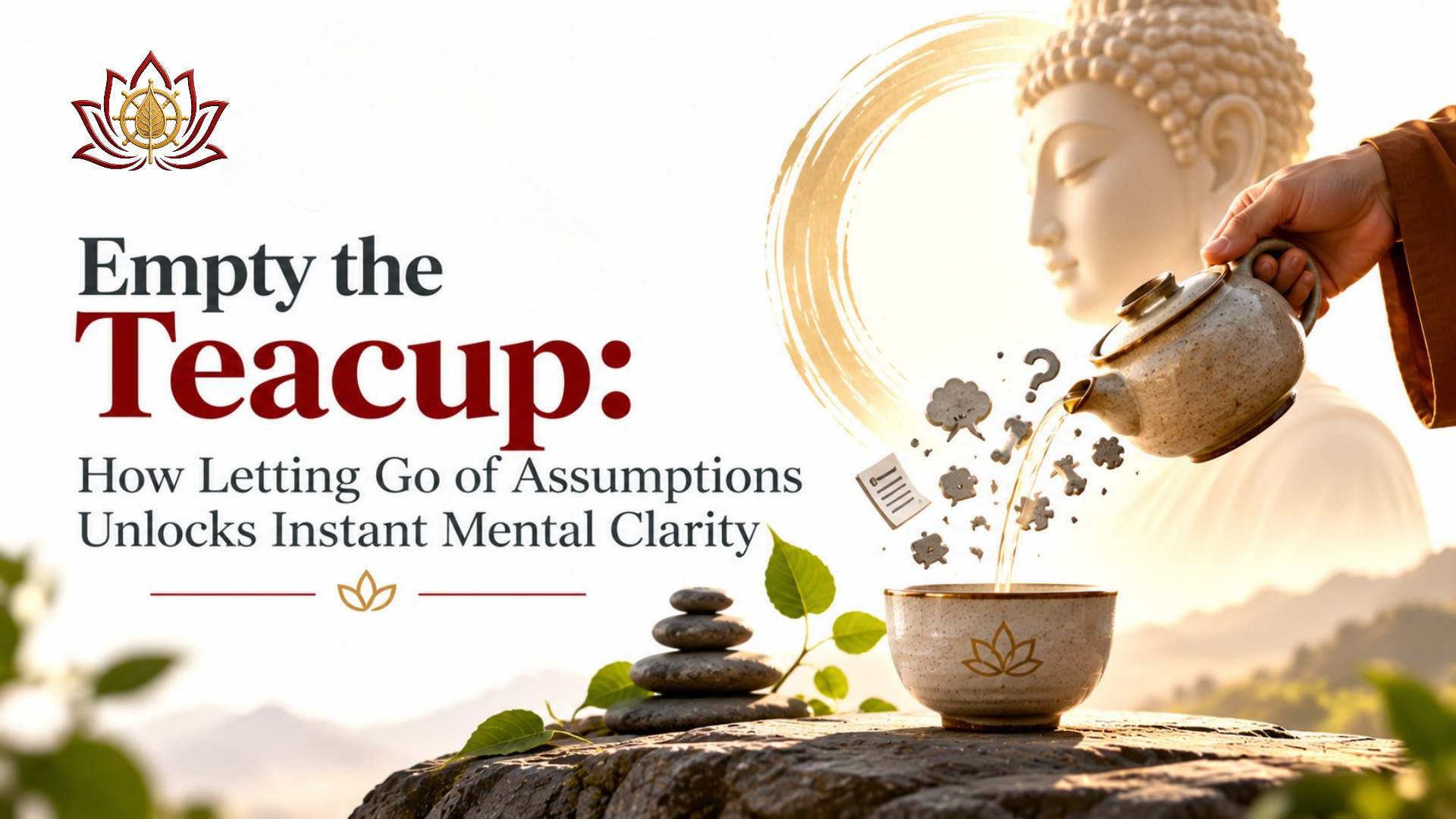
A classic Zen parable vividly illustrates how our existing mental baggage prevents genuine understanding. A highly educated university professor once visited the Zen master Nan-In to inquire about the essence of Zen philosophy. The moment he arrived, the professor spoke relentlessly, eagerly displaying his own extensive reading, personal theories, historical analysis, and rigid assumptions about spiritual doctrines.
Master Nan-In listened serenely while quietly preparing a pot of tea. He began pouring the tea into his guest's cup. The cup quickly filled to the rim, yet Nan-In continued to pour. Tea spilled over the edges, running across the table and onto the floor. Unable to restrain himself any longer, the professor blurted out, "Master, the cup is full! No more will go in!" Nan-In set the teapot down and smiled gently.
"Like this cup, your mind is full of your own opinions and speculations. How can I show you Zen unless you first empty your cup?"
Analysis & Reflection
This simple interaction illuminates why mental clarity feels so elusive. When we feel overwhelmed or confused, we instinctively seek out more tactics, advice, and mental frameworks. Yet, true insight demands active unlearning. If our minds are already saturated with ego, unyielding assumptions, overthinking, and pre-conceived notions, no fresh wisdom can take root. To experience a true mind reset, we must cultivate the humility to release our intellectual pride and empty our cognitive cup, making room for genuine clarity to enter.
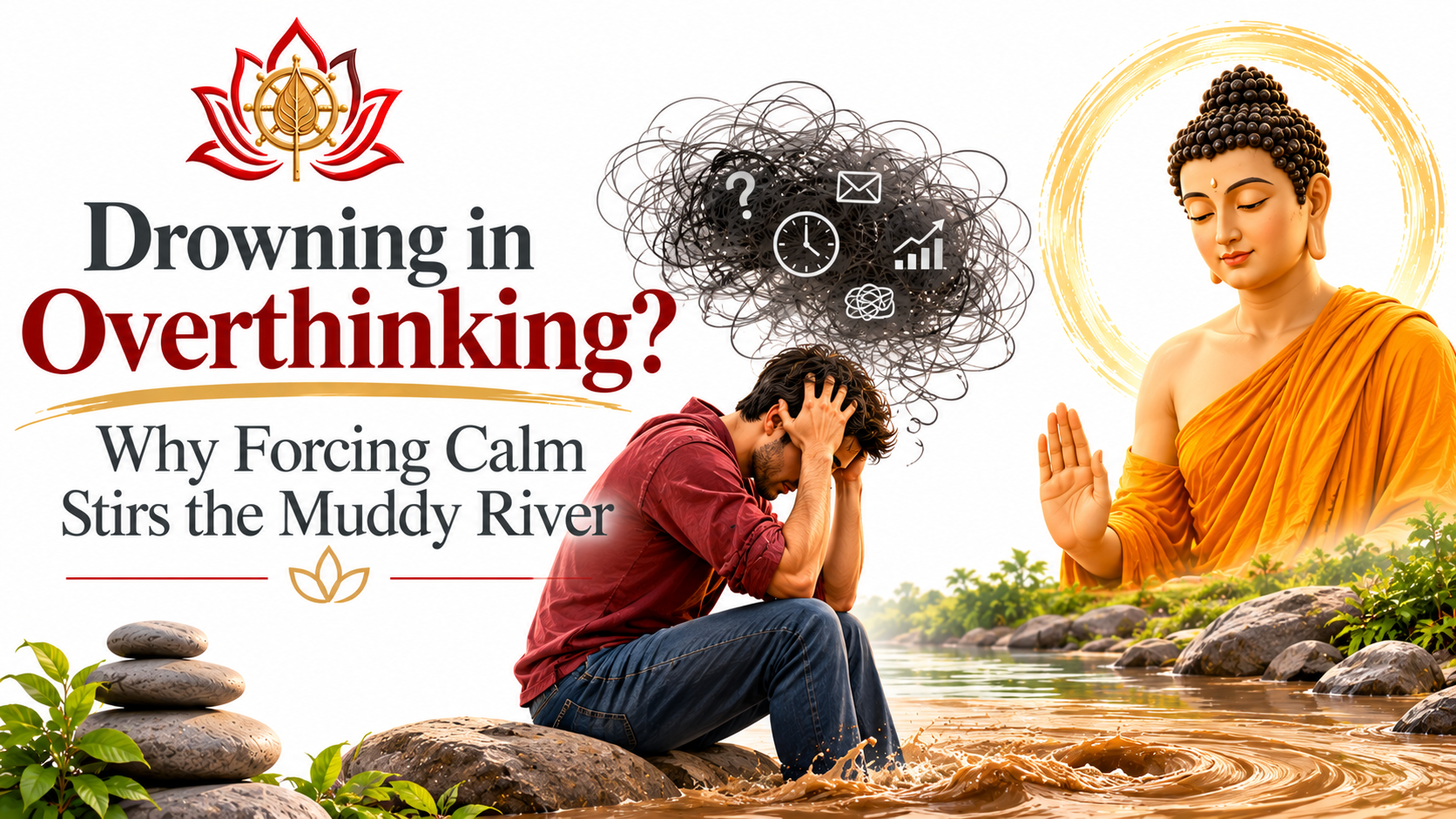
Stop Agitating Muddy Waters Let Stillness Clear Your Thoughts While traveling on foot with his disciples, Lord Buddha paused near a small river and asked for water to quench their thirst. However, a passing cart had recently churned up the riverbed, leaving the water thick with mud and completely unfit to drink. Observing the dirty, agitated stream, most of the disciples felt helpless and urged the group to continue walking in search of a cleaner source.
One disciple, however, chose to stay behind on the riverbank. Rather than attempting to clear the water by wading in or scooping away the mud, he sat down quietly and waited. He watched the river with patient, non-reactive presence (sabhr). As time passed, the suspended silt naturally settled to the bottom under its own weight, leaving clean, crystalline water flowing at the surface. The disciple filled his vessel and brought it to Buddha, explaining that by simply sitting still, the water had purified itself.
"When your mind is disturbed by anger or anxiety, do not try to clean it by force. Sit quietly, give it time, and everything will settle on its own."
Analysis & Reflection
When our inner waters are disturbed by anger, fear, or anxiety, our habit is to fight those emotions or aggressively force ourselves to calm down. Yet, struggling against our feelings is like thrashing about in a muddy river it only agitates the silt further. Buddha’s teaching highlights that sabhr (patience) is an active stance of mindful non-interference, not passive neglect. By sitting quietly and allowing emotional turbulence to exist without reacting to it, we give the mental mud the space it needs to settle naturally.
Look Beyond the Outer Form Embody the Inner Light A Brahmin merchant who had spent decades performing elaborate external rituals and worshipping sacred icons once approached Lord Buddha. Depressed that his dedicated efforts had never yielded a direct experience of the Divine, he asked why his worship remained unrewarded. Buddha asked the merchant what he saw when he looked at a burning oil lamp. The merchant answered that he saw the physical flame (kaya), its brilliant colors, and the dance of its flickering movement.
Buddha gently explained that the merchant observed only the physical form (kaya) of the lamp, while remaining blind to its quality (guna) the surrounding light radiated outward and its essential purpose or law (dharma): the destruction of darkness (दीपक से अंधकार मिटना ही उसे धर्म कहते है).
"You see the physical form and idol, but you do not embody its virtues. To absorb the teachings and live with righteous conduct is true vision."
Analysis & Reflection
It is easy to mistake surface-level habits, superficial routines, or external spiritual symbols for authentic inner transformation. A true mind reset requires moving beyond the outer kaya (the physical form) to embody the guna (the radiant inner qualities) and dharma (the active purpose of dispelling cognitive darkness). Real peace comes not from performing empty rituals or clinging to external representations, but from living in alignment with noble principles through righteous conduct (Sadhkarma), allowing virtue to illuminate our consciousness from within.
Build an Unshakeable Core That Outlasts the Storms
In Kamakura, Japan, stands the monumental Great Bronze Buddha (Daibutsu), cast in 1252 AD and rising nearly 13 meters into the air. Originally, this massive bronze figure was housed inside a magnificent, elaborate wooden temple hall designed to protect it. However, over the centuries, the coastal region was repeatedly struck by catastrophic natural disasters, including earthquakes, tempests, and powerful tsunamis in the 14th and 15th centuries. In both 1369 and 1498, violent sea storms completely destroyed and swept away the entire wooden temple structure.
Yet, amid the swirling winds and devastating waves, the bronze Buddha remained standing entirely unmoved. With its half-closed eyes cast gently downward and its posture settled in serene meditation, the statue weathered the collapse of everything around it, standing under the open sky for centuries as an enduring monument to stillness.
Analysis & Reflection
This historic statue serves as a striking contemplation of impermanence (Anitya). External structures, material security, and worldly circumstances are inherently temporary; they will inevitably shift, break, or dissolve. The statue’s half-closed eyes symbolize an inward-facing awareness—a rooted presence that remains undisturbed by external catastrophe. When we cultivate a quiet, centered internal core through deep awareness, we build a foundation that outlasts life's unpredictable storms. Outer temples may fall, but an unshakeable mind stands firm.
*Turn the Realization of Suffering into Active Compassion
When Prince Siddhartha was five or six years old, he spent an afternoon in a royal garden alongside his father, King Suddhodana, and his uncle. While watching the serene landscape, he suddenly witnessed a hawk dive from the sky, seize a small struggling fish from a pond, and carry it away. Siddhartha watched helplessly as the fish gasped for life until its breath stopped completely in the bird's talons.
Deeply moved, tears welled in the young prince's eyes. He retreated to the shade of a tree, sat down in silence, and asked his uncle: "Why does everything in nature that is so beautiful end so quickly?" He wept as he observed that life could end so abruptly, realizing that suffering touches every living creature.
Analysis & Reflection
This childhood experience planted the initial seeds of impermanence (Anitya) and the universal reality of suffering (Dukkha) in young Siddhartha's heart. Recognizing that life is fragile and that pain is a shared condition is not meant to inspire despair. Instead, an honest confrontation with Dukkha softens the heart, breaking down the walls of ego. This realization transforms personal sorrow into loving-kindness (Maitri) and active compassion (Karuna) for all beings who navigate the fleeting nature of existence. Protect Your Mental Clarity Through Daily Grounding Rules
To protect conscious awareness from cognitive pollution, spiritual frameworks such as GUDCON (Global Union of Dhamma Contemplation) emphasize practical daily discipline, moral clarity, and heart-centered devotion. GUDCON stresses that intellectual philosophy alone is insufficient; to transcend superficiality and hypocrisy (pakhandwad), seekers must integrate devotional practice (Bhakti), congregational chanting (Sankirtan), and pure living into their everyday routines.
Central to this practical discipline is the strict observance of the Panchsheel five ethical boundaries designed to purify consciousness and guard the mind:
* Non-violence (Ahimsa): Refraining from causing physical or emotional harm to any living creature, relinquishing anger, and cultivating active kindness. * Non-stealing (Asteya): Abstaining from taking what is not freely given, practicing absolute honesty, and honoring the boundaries of others. * Avoiding Sexual Misconduct (Brahmacharya): Refraining from harmful sexual behaviors, exercising self-restraint, and honoring commitment in relationships. * Truthfulness (Satya): Abstaining from deceitful, harsh, or manipulative speech, and living with authentic truth. * Abstaining from Intoxicants (Sura-Meraya-Majja-Pamadatthana): Avoiding alcohol, drugs, and clouding substances to preserve complete mental clarity, focus, and presence.
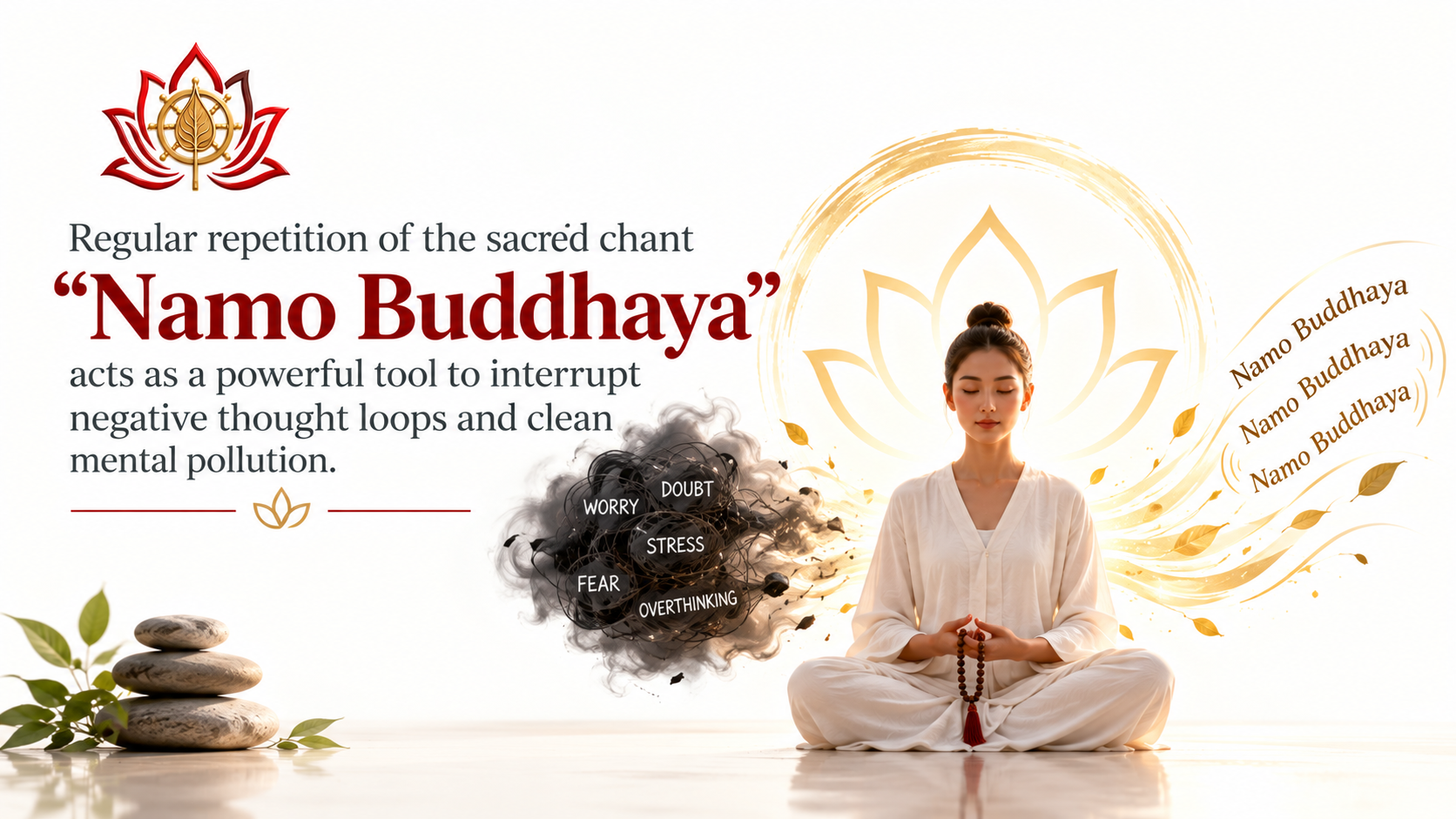
To complement these ethical boundaries, practitioners engage in sacred daily practices. They partake in Arpan consuming pure, vegetarian food offered in devotion to Buddha and study the primary core scriptures of the Tripitaka (Vinaya Pitaka, Sutta Pitaka, and Abhidhamma Pitaka). Furthermore, disciples practice repetitive mantra chanting to anchor the restless mind in divine contemplation:
"Namo Buddhaya Namo Buddhaya, Buddhaya Buddhaya Namo Namo" "Namo Dhyanam Namo Karmam, Buddham Buddham Namo Namo"
By pairing rigorous moral principles (Panchsheel) with sacred chant and contemplation, seekers build a protective sanctuary within their own minds, ensuring that toxic sensory inputs cannot disrupt their inner peace.
“Achieving a true mind reset is not about acquiring complex techniques or piling on more intellectual knowledge. As these timeless teachings reveal, real transformation happens when we simplify: 1. Empty your mental cup: Let go of rigid assumptions, overthinking, and intellectual pride. 2. Practice patient non-interference: Allow the agitated mud of anxiety and anger to settle naturally through st”
Published on 3 November 2026 · GUDCON