Published on 15 October 2026 4,071 views
How Chanting "Namo Buddhaya" and Ancient Dhamma Wisdom Shatter Negative Thought Loops
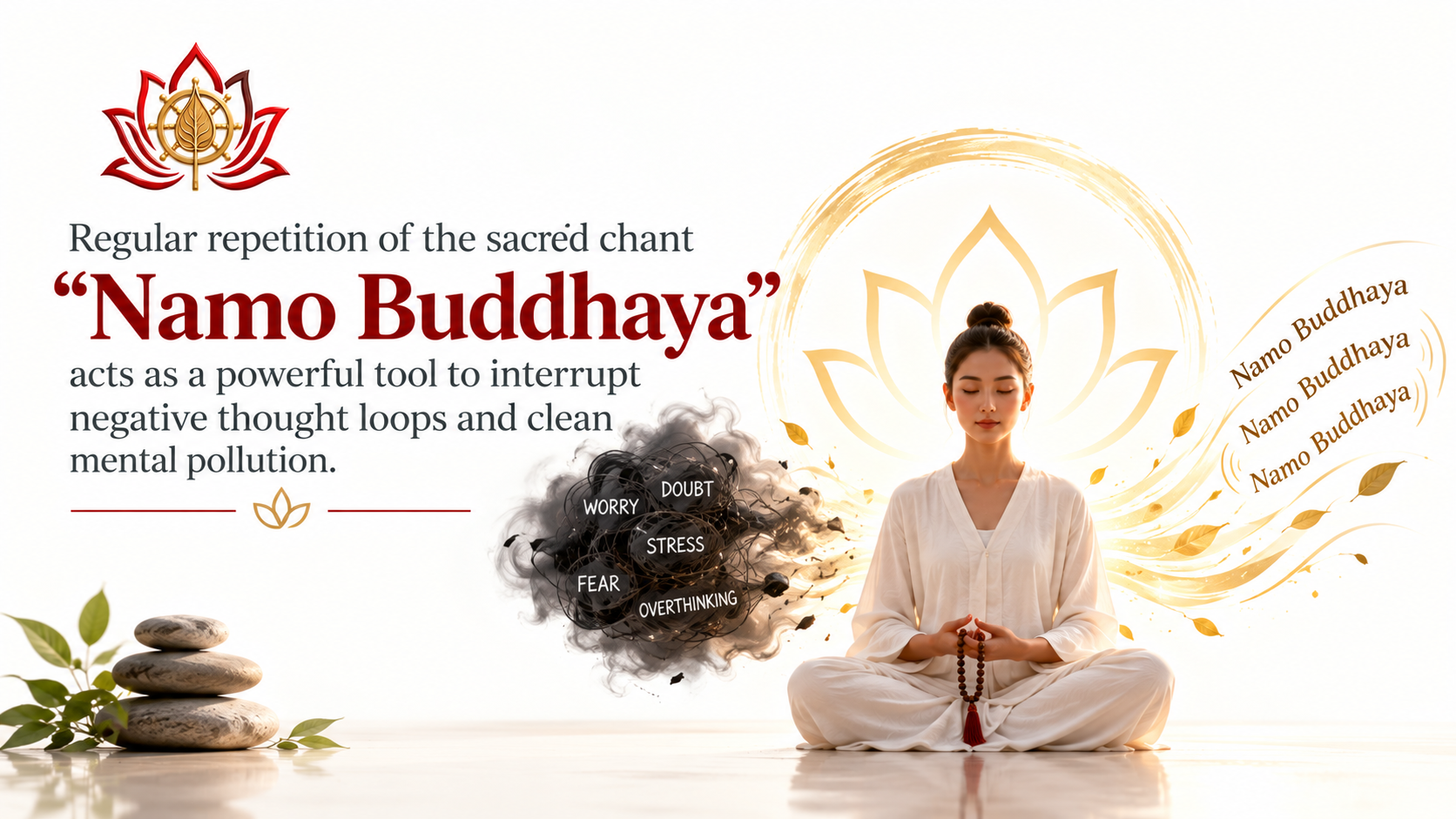
Regular repetition of the sacred chant "Namo Buddhaya" acts as a powerful tool to interrupt negative thought loops and clean mental pollution
1. Introduction: The Overfull Mind and the Need for a Mental Reset
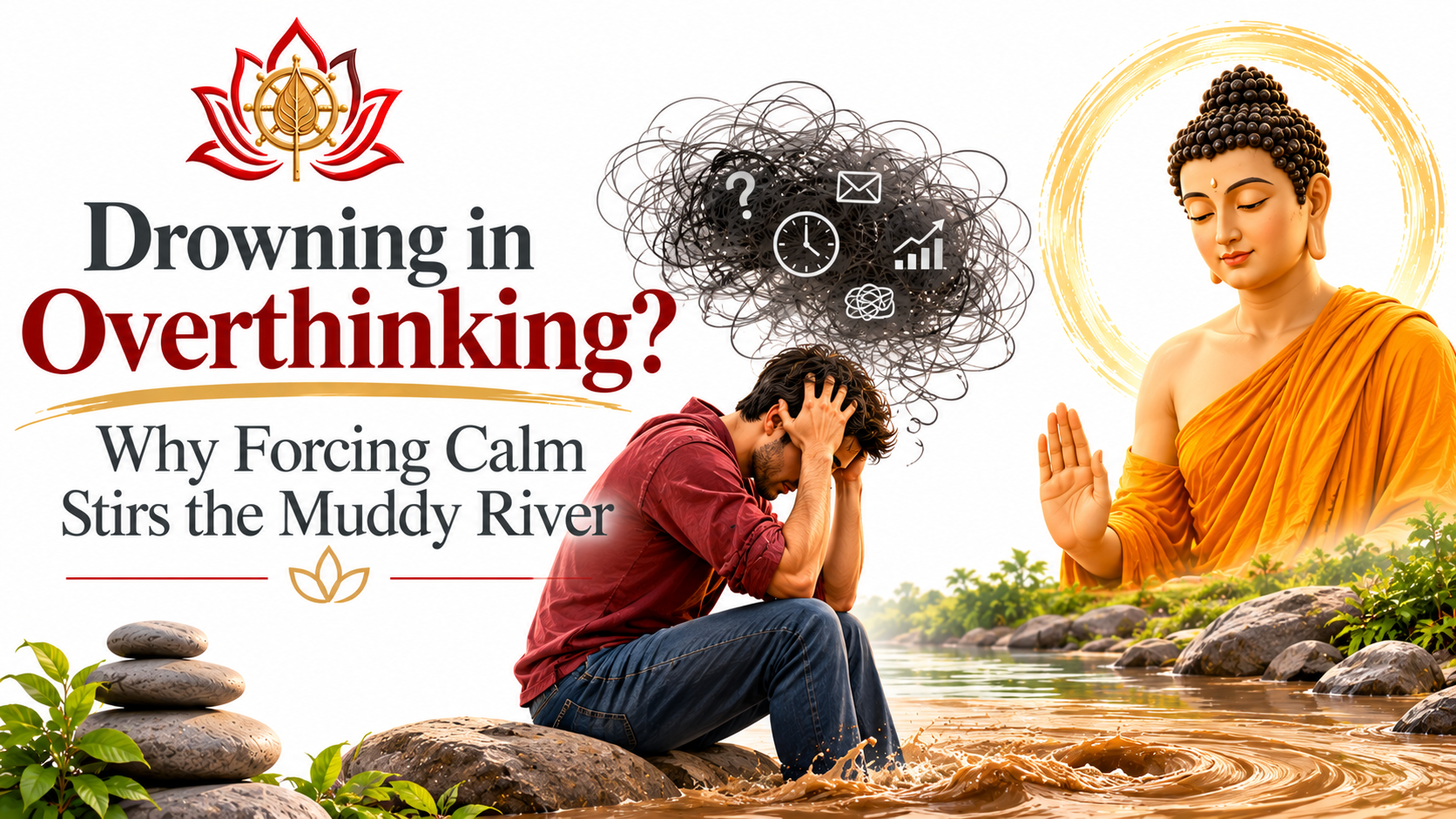
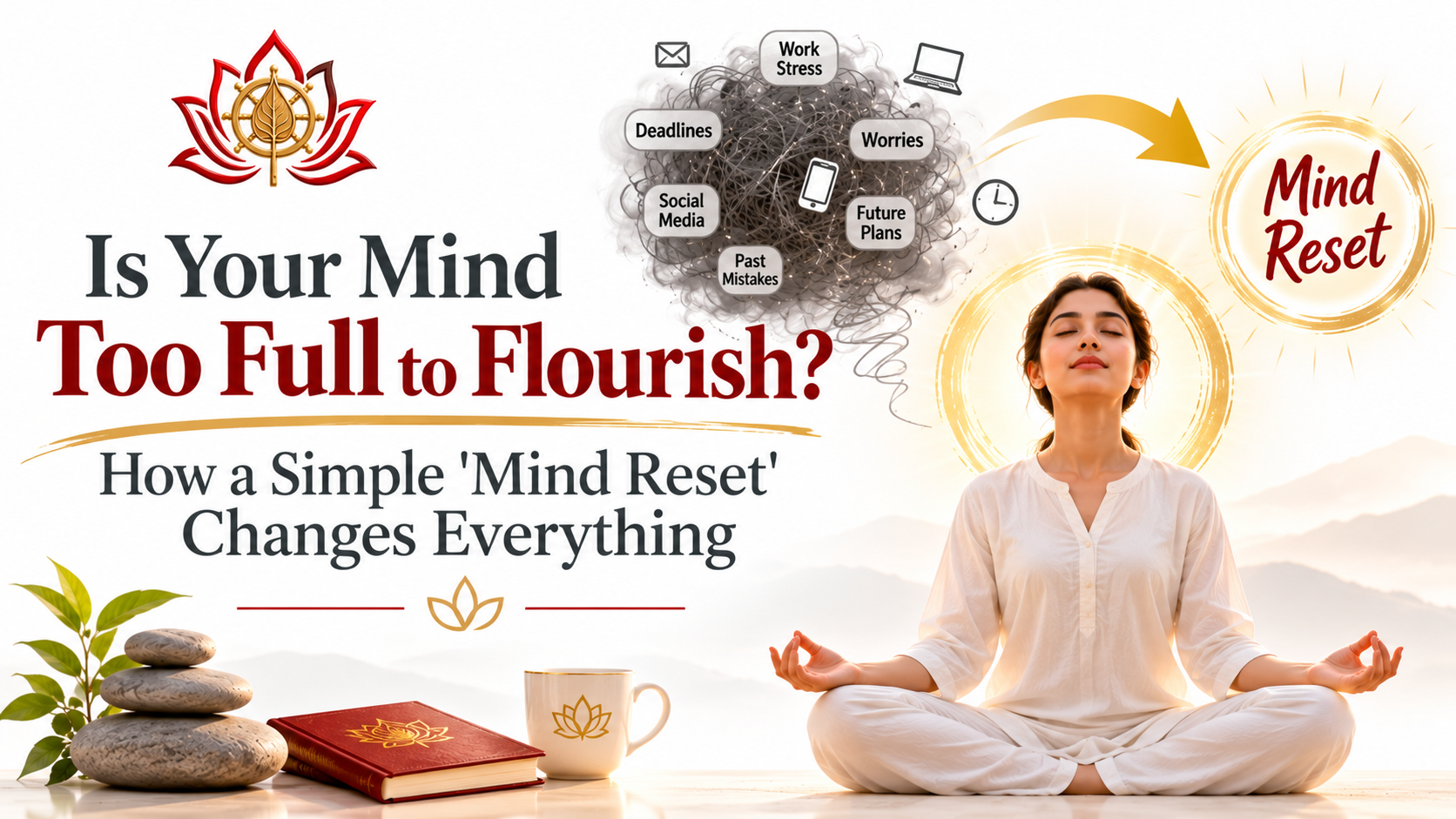
In our hyper-connected, high-velocity world, the human mind frequently finds itself trapped in cycles of mental pollution. Continuous loops of overthinking, sudden spikes of debilitating anger, persistent background anxiety, and quiet currents of jealousy can make our inner landscape feel exhausting and chaotic. When caught in these reactive spirals, the mind behaves much like an overfilled tea cup spilling uncontrollably over its brim, or a stirred-up, muddy river after a torrential storm—turbulent, murky, and utterly incapable of reflecting reality with clarity.
Underneath this cognitive noise, Dhamma teaches that the baseline state of consciousness is one of luminous clarity and stillness. However, when mental sediment—or kilesas (defilements)—is continually churned up by stress, we lose touch with this innate tranquility. Our natural instinct is often to aggressively fight these negative thought patterns, trying to think our way out of overthinking. Yet, attempting to force an agitated mind into stillness only generates further exhaustion.
True relief requires a fundamental shift in consciousness. By pairing the resonant, devotional practice of the sacred chant "Namo Buddhaya" with timeless insights from Dhamma contemplation, we gain an immediate cognitive and spiritual circuit breaker. This ancient wisdom provides a structured path to interrupt destructive loops, allow mental pollution to settle naturally, and cultivate an unshakable core of internal peace amidst life's inevitable chaos.
2. Takeaway 1: Stop Stirring the Water—Let Your Mental Sediment Settle
1. Don't Force the Mind Clear: The Power of Patient Stillness
In Echoes of Enlightenment, a classic parable describes the Buddha traveling on foot with his disciples when they came upon a small river. Needing to quench their thirst, they approached the bank, only to find the water thick with mud and debris churned up by passing carts. It was utterly unfit to drink.
Frustrated by the condition of the water, most of the disciples insisted on moving forward immediately to search for another source. However, one disciple chose to stay behind. He sat down quietly on the riverbank and simply waited. He did not agitate the water further, nor did he try to filter it with his hands. As time passed in unbroken stillness, the heavy mud gradually settled to the bottom, leaving the water crystal clear and pure. The disciple drank peacefully, filled his vessel, and rejoined the Buddha. When the Buddha smilingly asked why he had delayed, the disciple replied that simply exercising patience allowed the river to clean itself naturally.
"Just like this river water, in life too when the mind becomes dirty—filled with anger, anxiety, jealousy—do not try to forcibly clean it. Just sit quietly for a while, give it time. Everything will organize itself naturally."
When we experience a surge of emotional distress or negative thinking, our immediate impulse is to wrestle with our thoughts. Yet, attempting to violently cleanse an agitated mind through cognitive force is like reaching into a murky river and thrashing around to clear the mud—it only stirs up more sediment.
Patience (sabr) acts as a profound spiritual medicine. When an emotional storm arises—whether from workplace frustration or personal anxiety—the most potent response is to step back and sit in conscious stillness. By giving the mental landscape room to breathe without reacting, the emotional turbulence settles organically, revealing the clear, underlying reality.
3. Takeaway 2: Empty Your Cup to Break Free from Overthinking
2. The 'Empty Cup' Principle: Releasing Ego and Assumptions
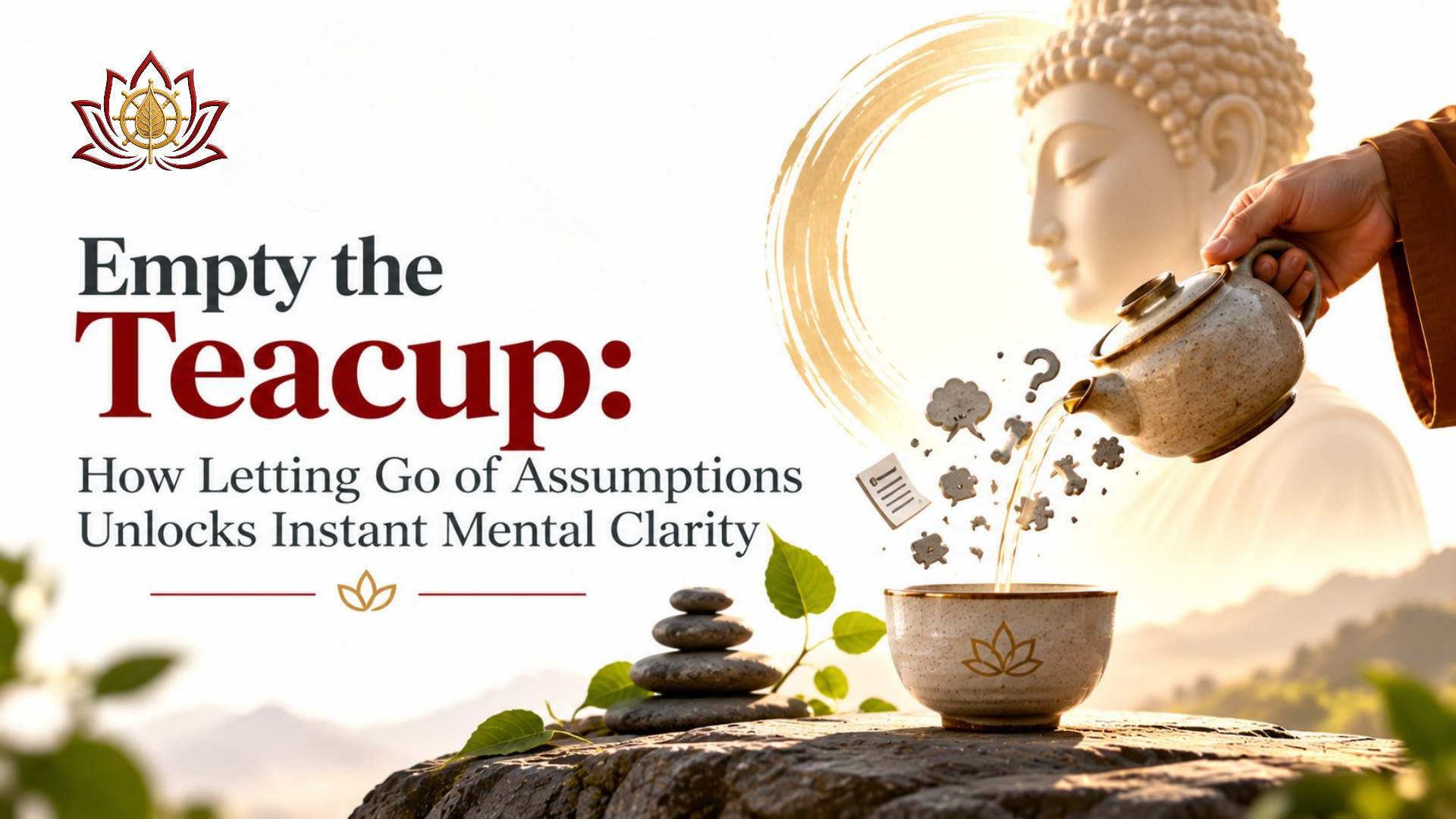
Negative thought loops do not exist in a vacuum; they are constantly fed and sustained by an overfull mind. This dynamic is captured in the classic Zen narrative of a distinguished university professor who visited Zen Master Nan-in to inquire about the essence of Dhamma and Zen practice.
As soon as they sat down, the professor spoke relentlessly, displaying his immense learning, quoting complex texts, and offering his own rigid theories. Nan-in listened in gentle silence while preparing a pot of tea. He began pouring the tea into the visitor's cup. He filled the cup to the brim, but then kept pouring. The tea spilled over the rim, flowing across the tray and onto the table. Unable to contain his frustration, the professor shouted, "Master! The cup is full, no more will go in!" Nan-in lowered the teapot, looked warmly at the scholar, and observed:
"Just like this cup, your mind is also full of thoughts, prejudices, and pre-learned things. Until you empty it, how can new knowledge or insight enter you?"
Repetitive overthinking is sustained by ego, unexamined assumptions, and intellectual defense mechanisms. When our mental cup is filled to the brim with pre-conceived judgments and a desperate need to be right, fresh perspective cannot enter.
To shatter a toxic cognitive loop, one must actively practice "emptying the cup." This requires cultivating intellectual humility—surrendering our rigid narratives about how things "should" be and making quiet space within consciousness. Only an empty cup can receive the refreshing waters of genuine insight and clarity.
4. Takeaway 3: "Namo Buddhaya" Chanting as a Direct Circuit Breaker for Consciousness
3. Repetition as Purification: Reprogramming the Mind with "Namo Buddhaya"
Within the GUDCON framework (Global Union of Dhamma Contemplation), sacred sound is understood not merely as a psychological tool, but as Mantra Sadhana, Sankirtan (devotional chanting), and the living expression of Buddha Bhakti (loving devotion). Rather than approaching the Buddha solely as a historical figure, GUDCON invites practitioners to experience the Buddha as Bhagwan—a supreme source of unconditional grace, wisdom, and compassion.
When the mind is trapped in a destructive thought loop, intellectual willpower alone often fails because cognitive loops operate on deep emotional reactivity. Buddha Bhakti transforms this dynamic. By engaging in sacred Sankirtan, the practitioner's emotional heart is filled with pure devotion (prema-bhakti), which neutralizes fear and anger far more rapidly than cold logic ever could. On a cognitive level, the rhythmic vocalization and mental repetition of "Namo Buddhaya" disrupts rumination, shifting neural activity away from reactive stress states toward centered, harmonious alpha brainwave clarity.
Namo Buddhaya Namo Buddhaya Buddhaya Buddhaya Namo Namo Namo Dhyanam Namo Karmam Buddham Buddham Namo Namo
To ensure that the purifying power of this sacred vibration takes deep root, GUDCON grounds this practice in the daily discipline of Panchsheel—the five foundational ethical precepts. Far from being arbitrary rules, each precept serves as an essential guardrail that directly prevents negative thought loops from forming:
1. Non-violence (Ahimsa): Abstaining from causing harm quells internal rage and shuts down toxic loops of vengeance or resentment. 2. Non-stealing (Asteya): Refraining from taking what is not given releases the mental friction of covetousness and envy. 3. Avoiding Misconduct (Brahmacharya): Maintaining purity and commitment in relationships eliminates guilt, betrayal, and emotional chaos. 4. Truthfulness (Satya): Speaking absolute truth frees the brain from the heavy cognitive burden and anxiety required to maintain deceits. 5. Avoiding Intoxicants (Sura-Meraya-Majja-Pamadatthana): Refraining from alcohol and drugs protects executive cognitive function, shielding the mind from involuntary emotional spirals and loss of self-control.
By anchoring sacred chanting within ethical conduct, the practitioner cleanses the subtle layers of consciousness, transforming the mind into a quiet sanctuary where divine peace can permanently abide.
5. Takeaway 4: Internalize the Light—Shift from External Worry to Inner Virtues
4. Looking Beyond the Statue: Embodying the Divine Light Within
Much of our internal anxiety stems from an over-fixation on external forms, rigid routines, and superficial appearances while neglecting interior transformation. This spiritual misunderstanding is illustrated in a poignant dialogue between a wealthy merchant Brahmin and the Buddha.
The Brahmin approached the Buddha in deep despair, explaining that despite spending decades performing meticulous rituals and worshipping sacred idols, he had never experienced a true divine vision (darshan). The Buddha listened compassionately, pointed to a nearby oil lamp casting a warm glow across the room, and asked the Brahmin what he saw. The Brahmin answered that he saw the metallic lamp, the burning flame, and the shifting colors of the fire.
The Buddha gently explained that the Brahmin was seeing only the lamp's outer physical form (kaya). He had overlooked its intrinsic quality (gun) and its essential duty (dharm). The true nature of a burning lamp is not its metallic frame or visible flame, but the invisible light it continuously emanates to dispel surrounding darkness.
Applying this lesson, the Buddha clarified that endlessly gazing upon physical statues or performing external routines without internal change does not yield divine connection. Divine presence is realized when a practitioner internalizes the Buddha's qualities (gun)—such as infinite compassion and patience—and fulfills their true nature (dharm) by actively dispelling the darkness of ignorance through noble deeds (sadhkarma). When we shift our focus from worrying about external conditions to actively embodying virtues within, chaotic thought loops dissolve in the radiant light of righteous action.
6. Takeaway 5: Unshakable Inner Peace—Standing Firm Amidst Life's Tsunamis
5. The Kamakura Principle: True Peace Remains Intact Through Impermanence
To navigate an unpredictable world without losing our center, we can reflect on the monumental symbol of the Great Buddha of Kamakura in Japan. Cast in 1252 AD, this magnificent 13-meter bronze icon has stood exposed to the elements for nearly eight centuries, surviving catastrophic earthquakes, typhoons, and devastating tsunamis.
Originally, the massive bronze Buddha was housed inside a magnificent, multi-story wooden temple hall. However, historical records note that in 1369 and again in 1498, massive seismic tsunamis and violent storms swept over the coast, completely destroying and washing away the surrounding temple halls. Yet, through every disaster, the Great Buddha remained standing on its stone pedestal—unshaken, serene, and undisturbed.
This historical monument serves as a profound teacher of Anityata (impermanence). The seed of this ultimate truth was planted early in young Siddhartha's life when, at six years old, he watched a hawk swooping down to seize a struggling fish from a stream. Seeing the fish's life vanish in an instant, young Siddhartha wept, recognizing that all worldly existence is impermanent and bound to suffering, planting the seed for his deep compassion (karuna).
Negative thought loops hold power only because we mistake our fleeting cognitive formations (sankharas) for solid, permanent realities. A intrusive thought arises, lingers, and naturally dies away; it only collapses us into anxiety if we cling to it as permanent truth. Just as the wooden hall surrounding the Kamakura Buddha was temporary, our passing thoughts and outer life circumstances are fundamentally anitya (impermanent).
The Kamakura Buddha’s meditative posture—with eyes half-closed—symbolizes the ideal state of Dhyanam: fully conscious of external storms, yet inwardly anchored in immovable stillness. When life's personal tsunamis strike, we are reminded that while outer structures shift and fade, the quiet awareness within remains untouched.
7. Conclusion: Returning to Mental Clarity
Shattering negative thought loops does not require violent internal resistance or constant cognitive warfare. Ancient Dhamma wisdom and the GUDCON path offer a practical, gentle roadmap back to our baseline of luminous stillness:
* Practice Patient Stillness: When emotional waters become murky with anger or anxiety, stop stirring. Allow mental sediment to settle naturally through quiet waiting. * Empty the Cup: Continually release intellectual arrogance, rigid assumptions, and overthinking to remain open to living wisdom. * Purify Consciousness with Bhakti: Utilize the continuous repetition of "Namo Buddhaya" as devotional Sankirtan to anchor the heart in divine grace, while protecting cognitive clarity through Panchsheel. * Embody Inner Light: Look past outer physical forms (kaya) and internalize sacred virtues (gun) through active good deeds (sadhkarma), fulfilling your essential nature (dharm). * Anchor in Impermanence (Anityata): Recognize that thoughts and external trials are fleeting. Stand unmoved like the Kamakura Buddha, holding the half-closed eyes of mindful awareness amidst life's temporary storms.
When your mental waters become muddy today, will you force a reaction—or will you sit quietly, chant "Namo Buddhaya", and let the clarity return on its own?
Published on 15 October 2026 · GUDCON